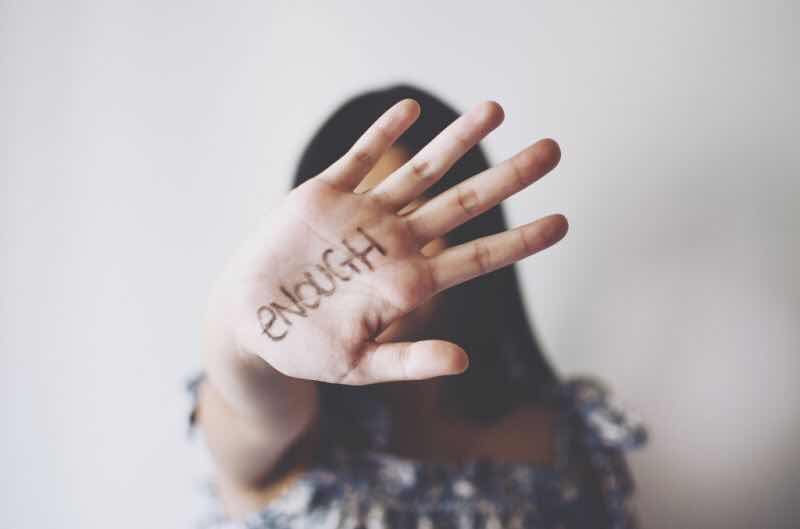
Showing posts with label Women. Show all posts

Saturday, November 19, 2022

Only the Good Die Young

I've been on a big Billy Joel kick lately. 

Maybe it's because I've traveled home to New York City a few too many times this year. Or maybe I'm just getting old and adult contemporary. Whatever the reason, there's now a playlist in my Spotify library called "Billy Joel's Most Fire Cuts" and it makes me laugh at myself. One of the tracks on there is his single "Only the Good Die Young," released the year I was born.

The song tells the semi-autobiographical (?) story of a rough-around-the-edges boy who's trying to convince a Catholic girl to YOLO and quit being such a prude. Some quick Googling told me that for a short, stocky, piano-playing Jewish kid from Long Island, Billy Joel has been doing pretty well for himself. On top of being a gazillionaire, he's managed to marry a tall, blonde, successively-younger shiksa approximately every 15 years and sire babies with most of them.

All of which got me thinking about religion, sex, and parenting. In the movie Stand By Me, set in 1956, juvenile delinquent greaser Kiefer Sutherland tells his best friend, Eyeball Chambers, to forget about the Catholic girls. "If you wanna get laid, you gotta find yourself a Protestant," he advises. "A Jew's good."

It's true. 

We Jews--the secular ones at least--don't seem to place a particularly high premium on chastity. This isn't so much a matter of religion, but rather incidental to some sort of cultural wokery that appears to be embedded into the zeitgeist of New York City. 

My mother was divorced from her first husband before she had me with her second, kept her last name, and went to medical school as one of ten women in her class. Although fully identifying as culturally Jewish, she was (and is) a staunch atheist and pragmatist. The last thing she's ever been interested in is characterizing sex as moral or religious currency. For this I have to thank her and give her a huge amount of credit as I think about how to parent my teenagers through this stage of their lives. 

My mother's message to me about sex was very straightforward and imparted to me from a young age: (1) masturbation is fun, do it as much as possible (in private); (2) you have to protect your body and your mind: (a) you don't have to love someone to sleep with them, but it helps to at least somewhat care about each other, and (b) always use precautions because you don't want to become pregnant or get an STI; and (3) if you encounter persistent erectile dysfunction in the 19-25 year-old demographic, don’t be offended: consider moving on because something is likely amiss. 

Again, I credit my mom's parenting on this front. I am lucky to have made it this far in life without experiencing sexual assault or abuse, and can recall only a handful of times when I felt pressured or coerced into some sort of sexual encounter. 

Sex was never taboo or burdened with any kind of drama in my parents’ house. It was considered a natural and basic human function like eating, drinking, or going to the bathroom, and you approached it the same way. Like any other basic life function, it was "allowed" to occur under their roof. I intend to take the same approach with my kids when the time arrives for this conversation.

If I died today at 45, I'd have statistically died young. Whether that makes me "good," however, is probably just correlation as opposed to causation. 



Monday, October 28, 2019

What We're Really Talking About When We Talk About Nudes

I'd honestly never heard of California Congresswoman Katie Hill until she resigned from Congress following the unauthorized publication of sexually provocative, intimate pictures (aka "nudes") of her and a staffer and/or a campaign worker (?) a relationship that is prohibited under Congressional ethics rules. 

There are a few different things going on here, and it's interesting to unpack them.

First of all, having a relationship with a subordinate at work is a very bad idea. It is unethical or even illegal, and it is almost always very ill-advised because the power dynamic in the relationship is inherently exploitative. It is not out of the realm of normal, I don't think, for the party in the superior position to resign their job because of such a lapse in judgment.

That is an entirely different question from whether it is a bad idea for women (and also men, although they've been conspicuously absent from this conversation) to exchange nudes with intimate partners as a more general matter. 

Some people argue that women should never, ever let anyone take nude photographs of them or take nude selfies because they can only harm women in the future and serve no other purpose. But I would argue that they do serve a purpose and also are not the problem. 

The unauthorized disclosure of nudes--aka "revenge porn" is the problem, not the pictures themselves. Society needs to punish the vindictive, unauthorized release of nudes, not tell women they should never take them. I went to law school with a woman, Carrie Goldberg, who specializes in this burgeoning area and, a victim of revenge porn herself, has a practice dedicated to protecting women from it.

Although some people perhaps wish it weren't so (at no time in history has there ever been a shortage of pearl-clutching around erotic art) the reality is that nudes are a normal part of intimate modern relationships. That’s a fact and it's not going to change. Scolding and shaming women over nudes because someone might later weaponize them robs women of agency and places the blame for malicious conduct on victims instead of where it belongs: on perpetrators of this type of harassment.

Furthermore, the logic of “don’t take nudes because you assume the risk of their disclosure” also applies to many other situations that the law protects: having a nice car or a house (you might get robbed) wearing a miniskirt (you might get raped) or arguing (you might get assaulted). Yet we don't suggest that people shouldn't have nice cars or stand up for themselves. Life is a series of calculated risks, and we need not cater all of our lawful conduct to criminals.

Nudes also serve the simple, human purpose of pleasure--women's and men's alike. For many people, nudes are a form of expression, art, eroticism, and sexual agency. There is nothing wrong with exchanging nudes with trustworthy intimate partners and consenting adults who have equal power in a relationship.

So what are we *actually* talking about when we talk about nudes, then?

What we are really talking about in this whole Katie Hill nudes scandal is the perpetual shaming of women's sexuality. We are blaming the exposure of--and attacks upon--women's bodies against their will on the victim of the illegal or unauthorized conduct, rather than addressing the perpetrators. We are saying, shame on her, she shouldn't have done that, she deserves it, she assumed the risk, and so on.

And why are we doing that? We are doing that because it's easy. It is much easier to sit in judgment of women's sexual expression than it is to hold men accountable for violating their bodies and their trust. And that's fine, but let's at least be real and honest with ourselves about what we're really talking about when we talk about nudes.


Image: Shriver Report 

Sunday, August 18, 2019

Stories We Tell: Guest Post from Ernestine Saankalaxt' Hayes

I am deeply honored to post this previously unpublished piece by Ernestine Saankalaxt’ Hayes, which touches on themes of domestic violence, colonialism, and their stark parallels.

Hayes is the Alaska State Writer Laureate (2017-2018) and the author of Blonde Indian and The Tao of Raven. She was born and raised in Juneau when Alaska was still a territory. After 25 years in California, Hayes returned home where she received her MFA in creative writing and literary arts from the University of Alaska Southeast, where she teaches. 

She belongs to the Kaagwaantaan clan of the Eagle side of the Lingit nation. She has four grandchildren and two great-grandchildren.

Thank you, Professor Hayes, for entrusting your work to this space.

STORIES WE TELL 

From our very first meeting, he courted me like a windstorm. He tickled me with freshly cut blossoms; he sweetened me with candies. His kisses sparkled my lips. He labored to appear generous and charming to my dazzled family. I was captivated. “I will always love you,” he promised. “I’ll be everything to you.” He cuffed me gently on my willing chin. “I am the only friend you’ll ever need.”

From the Peace Treaty with Massasoit 1621

That neither he nor any of his should injure or do hurt to any of our people. … That if any of our tools were taken away when our people were at work, he should cause them to be restored; and if ours did any harm to any of his, we would do the like to them. If any did unjustly war against him, we would aid him; if any did war against us, he should aid us.
In the initial stage of an abusive relationship, the abuser is on his best behavior.
His first displeasure surprised me; we’d moved in together only the week before. He became impatient when I forgot where I left my keys. It delayed us by no more than a few minutes, but his annoyance unnerved me. After I found my keys where I’d dropped them at the doorstep, he apologized and swore his undying love.
Margin Notes to Delaware Treaty 1778

All offenses mutually forgiven. Peace and friendship perpetual. In case of war, each party to assist the other. … That all offences or acts of hostilities by one, or either of the contracting parties against the other, be mutually forgiven, and buried in the depth of oblivion, never more to be had in remembrance.
I misplaced my keys three more times before he took control of them. Now when I wanted the car, I had to check with him. Usually he told me to wait for him to drive me. Sometimes after questioning me, he retrieved the keys from the top dresser drawer where he kept his folded socks and smooth-flattened jockeys. “You’re lucky I let you drive my car at all,” he'd say with a firm smile. 

I had to agree.

Increasing stress sets in when the abuser begins to feel more confident in the relationship and more secure in his strength. Disagreements occur more frequently. The abuser becomes more demanding, and he emphasizes the appearance of his own generosity. 
Margin Notes to Treaty with Six Nations 1784

Six hostages shall be immediately delivered to the commissioners by the said nations, to remain in possession of the United States, till all the prisoners, white and black, which were taken by the said Senecas, Mohawks, Onondagas and Cayugas, or by any of them, in the late war, from among the people of the United States, shall be delivered up.

The Commissioners of the United States, in consideration of the present circumstances of the Six Nations, and in execution of the humane and liberal views of the United States upon the signing of the above articles, will order goods to be delivered to the said Six Nations for their use and comfort.
I cooked one of his favorite dinners, creamed beef on toast. He liked it, he said, because it reminded him of his days in the navy. I’d used a different brand of chipped beef and didn’t realize I shouldn’t have added salt until he stood suddenly and kicked the chair to the floor. He tossed his meal onto the counter with a loud crack of the plate. “What the hell is this! What the hell is this!” he yelled, and burst out the door. 

When power and control have been achieved and the victim has been rendered subservient, equality has effectively been removed.
From the Quinault Treaty 1856

The said tribes and bands hereby cede, relinquish, and convey to the United States all their right, title, and interest in and to the lands and country occupied by them, bounded and described as follows: Commencing at a point on the Pacific coast, which is the southwest corner of the lands lately ceded by the Makah tribe of Indians to the United States, and running easterly with and along the southern boundary of the said Makah tribe to the middle of the coast range of mountains; thence southerly with said range of mountains to their intersection with the dividing ridge between the Chehalis and Quiniatl Rivers; thence westerly with said ridge to the Pacific coast; thence northerly along said coast to the place of beginning.
We made up. He came home hours later, gripping a supermarket bouquet of day-old flowers and steaming cartons of hot and sour shrimp with three-flavor soup in his virtuous fist. Months later, I supposed that was the night we’d conceived our first baby.

He teased me about my weight and encouraged me to quit my office job to be a stay-at-home mom. “I’ll keep working,” he said. “My paycheck is enough for everything.”

After our second child, he moved us into a lonely caretaker’s residence. “How do you expect me to support us unless I take a second job?” he yelled when I said I’d miss my family and my friends. “What do you do all day anyway? Fat lazy cow.” It was true. I'd gained too much weight with the babies, and I'd never lost those extra pounds. None of my old clothes fit; I wore only loose gray sweatpants and thrift shop housedresses. He compared me to our neighbors, to his mother and his ex-girlfriends. I wished I could be as slim and as smart.

From A Child’s Garden of Verses and Underwoods by Robert Louis Stevenson

“Foreign Children”
Little Indian, Sioux or Crow
Little frosty Eskimo
Little Turk or Japanee
O! don’t you wish that you were me?

You have seen the scarlet trees
And the lions over seas
You have eaten ostrich eggs
And turned the turtles off their legs.

Such a life is very fine
But it’s not so nice as mine
You must often, as you trod
Have wearied, not to be abroad.

You have curious things to eat
I am fed on proper meat
You must dwell beyond the foam
But I am safe and live at home.

Little Indian, Sioux or Crow
Little frosty Eskimo
Little Turk or Japanee
O! don’t you wish that you were me?
I took the kids to Sunday school. It was my only day away from the house. Once in a while he came along. He always approved of the pastor’s message. The words rang from the pulpit: the husband is the head of the family just as Christ is the head of the church.
From Horace Greeley’s Letter 13, Lo, The Poor Indian, Overland Journey, from New York to San Francisco, in the Summer of 1859, 1860

As I passed over those magnificent bottoms of the Kansas which form the reservations of the Delaware, Potawatomies, etc., constituting the very best cornlands on earth, and saw their owners sitting around the doors of their lodges at the height of the planting season and in as good, bright planting weather as sun and soil ever made, I could not help saying, “These people must die out—there is no help for them. God has given this earth to those who will subdue and cultivate it, and it is vain to struggle against His righteous decree.”
He called gas and laundry money my “allowance” and made me ask him for it every week. “One, two, three, four ...” he counted out the dollars while I tried to ignore the image of myself hoping for favor, my hand receiving the worn paper, another baby balanced on my hip.

The abuser claims always to be right and insists on making all important decisions, often asserting that his authority comes from God. The abuser belittles the victim and trivializes her concerns. Treating the victim like a child is basic abusive behavior.

From Horace Greeley’s Letter 13, Lo, The Poor Indian, Overland Journey, from New York to San Francisco, in the Summer of 1859, 1860

But the Indians are children. Their arts, wars, treaties, alliances, habitations, crafts, properties, commerce, comforts, all belong to the very lowest and rudest ages of human existence. … Any band of schoolboys, from ten to fifteen years of age, are quite as capable of ruling their appetites, devising and upholding a public policy, constituting and conducting a state or community, as an average Indian tribe. And, unless they shall be treated as a truly Christian community would treat a band of orphan children providentially thrown on its hands, the aborigines of this country will be practically extinct within the next fifty years.
When the children displeased him, he blamed me. “Can’t you even keep them quiet!” he yelled. He slammed into the living room where I sat nursing the youngest child. “You stupid bitch, you can’t even teach them how to keep their room clean. They’re out there in the mud and you can’t even wash the dishes. This place is a pigsty!”

My palms had begun weeping out of tiny blisters, clear fluid that reminded me of tears. Now the weeping had become cracked and bleeding pus. At its worst, I could only bandage my hands and try to keep them dry.


He threw the window open. “Shut up!” he yelled at the boys playing outside. I could see the muscles on his jaw beginning to flex. I put the baby down and went into the kitchen. I rinsed the dishes and hoped the baby wouldn’t cry. I’d been stupid to hope he might help me so my hands might heal. He followed me into the kitchen, standing close to me while I rinsed the glasses and bowls.

“They’re nothing but a bunch of little shits,” he said with a controlled voice. “They’d be better off if I raised them by myself.”

From Congressional Appropriation Act of March 3, 1893

Hereafter the Secretary of the Interior may in his discretion withhold rations, clothing and other annuities from Indian parents or guardians who refuse or neglect to send and keep their children of proper school age in some school a reasonable portion of each year.
The first time he hit me hard enough so that I had to go to the emergency room, I knew it was my own fault. He’d been quiet all morning. He wouldn’t talk. “What’s wrong?” I asked. “Is something wrong?” He refused to answer. “What is it? Did I do something wrong? Tell me,” I insisted.

Ridicule, especially of appearance, beliefs, or mannerisms, together with threats of violence and threats to take the children, are common. Describing the victim as unfit, especially to raise children, are behaviors upon which abusers rely.

I followed him to the front door. “Tell me,” I screamed at the back of his head. “Tell me!” He hit me just as I leaned forward. He broke two of my teeth. My lip was cut through to the other side.

At the emergency room, the nurses raised their eyebrows but said they couldn’t do anything. I would have to go to the dentist. Later that week, I visited the dentist with a story about my own clumsiness. “It’s my own fault,” I said to his white smock. “I know I should be more careful.” A metal butterfly was clipped on my chin. I never raised my voice again.

From “Indian Country,” Peter Matthiessen's 1979 compilation of Indian history

As an Indian who has dedicated his life to what he calls “the Indian rebirth movement,” Craig disliked the sentimental idea that his people drink to blot out the grief, anger, and frustration caused by the loss of Indian country and the death of their culture. “That is also the cop-out of the drunken Indian. The Indian drinks because he likes to drink, and he can’t handle it because all his traditions go the other way.”
The abuser often minimizes conditions, denies responsibility, and blames the victim. It is not uncommon for the victim to participate by assuming a sense of blame.

With the baby, it felt impossible to get my own job. We had never married, so when we bought a house, he put it in his own name, explaining that his veteran’s mortgage allowed him no other choice. At Christmas, I spent the money I’d managed to save out of my weekly money on gifts for the children. Sometimes when he felt generous, or when he was sorry he’d hit me, he'd give me a few extra dollars.

I was always grateful.

Opening Statement of Thomas N. Slonaker, Special Trustee For American Indians before the Subcommittee On Interior And Related Agencies Committee On Appropriations U.S. House Of Representatives, March 21, 2001

Under the Dawes Act, tribal lands were divided into parcels and allotted to individual Indians. The United States was established as the trustee of the allotted lands for individuals, and individual accounts were set up for each Indian with a stake in the allotted lands to be managed for the allottees' benefit.
Economic control is an essential component of domestic abuse. Taking or withholding resources is prevalent among abusers. 

One day I drove more than two hundred miles to visit my mother. I left a note telling him where I went. I thought he’d be angry, but when I called, his voice was calm. “It was a good idea. I’m glad you went. But I miss you,” he said. When I came back home with the kids, he cooked fried chicken and salad. We made love. The next morning, he slid a wet finger near the gas cap of my blue Toyota and examined some tiny white crystals. He tasted it. “It’s sugar,” he said. “Somebody sugared your tank. You’d better not drive it until I get it fixed.” After that, I had to borrow his car for trips to the store and the laundromat.

On Sundays, we walked to church. 
From Andrew Jackson's Second Annual Message to the People of the United States, December 6, 1830

It gives me pleasure to announce to Congress that the benevolent policy of the Government, steadily pursued for nearly thirty years, in relation to the removal of the Indians beyond the white settlements is approaching to a happy consummation. Two important tribes have accepted the provision made for their removal at the last session of Congress, and it is believed that their example will induce the remaining tribes also to seek the same obvious advantages.
An important component of domestic abuse is the isolation of the victim. Power is maintained through intimidation: by threats, by use of force, and by physically preventing the victim’s movement. Destruction of the victim’s possessions is common.

I stopped telling the children old stories. I helped them memorize lessons from school and sat with them while they talked. When he came into the room, everyone stiffened. They listened strictly to his words. They followed everything he said.

I supposed this was probably the way it should be.

Act of the Forty-Ninth Congress—Second Session, 1887, 24 Stat., 388

And every Indian born within the territorial limits of the United States to whom allotments shall have been made under the provisions of this act, or under any law or treaty, and every Indian born within the territorial limits of the United States who has voluntarily taken up, within said limits, his residence separate and apart from any tribe of Indians therein, and has adopted the habits of civilized life, [and every Indian in Indian Territory,] is hereby declared to be a citizen of the United States.
In the absence of the right to construct their own world views, victims often assume the beliefs of their abuser. 

My daughter was the first to marry. I pretended to believe her when she said her bruises were from a fall. My younger son was the first to abuse alcohol and drugs. He dropped out of school at fifteen and left home at sixteen. He came back once in awhile asking for money, but his father never hit him anymore. He was bigger than his dad now. My youngest daughter had children one right after the other by three different men. They almost never came to visit.

I didn’t know what stories my daughter told to her children.
Remarks of Kevin Gover, Assistant Secretary of Indian Affairs, September 8, 2000

This agency forbade the speaking of Indian languages, prohibited the conduct of traditional religious activities, outlawed traditional government, and made Indian people ashamed of who they were. Worst of all, the Bureau of Indian Affairs committed these acts against the children entrusted to its boarding schools, brutalizing them emotionally, psychologically, physically, and spiritually. … The trauma of shame, fear and anger has passed from one generation to the next, and manifests itself in the rampant alcoholism, drug abuse, and domestic violence that plague Indian country. Many of our people live lives of unrelenting tragedy as Indian families suffer the ruin of lives by alcoholism, suicides made of shame and despair, and violent death at the hands of one another.
Children of abuse inevitably exhibit emotional problems which can include weakened self-esteem, poor academic achievement, alcohol and drug abuse, apathy, helplessness, hopelessness, and suicide. 

We never spoke about the baby who died. I spent days sitting alone in my room, telling myself stories he probably thought I had forgotten.

From Leslie Silko's acclaimed novel, “Ceremony”

I will tell you something about stories, [he said] They aren't just for entertainment. Don't be fooled. They are all we have, you see, all we have to fight off illness and death. You don't have anything if you don't have the stories. Their evil is mighty but it can't stand up to our stories. So they try to destroy the stories let the stories be confused or forgotten. They would like that. They would be happy. Because we would be defenseless then.
He never admitted he'd done anything wrong.

In the wake of loss, shock is often characterized by emotional numbness. Deep depression occurs when the grief remains unresolved.

Tell this story: when the white man first came here, he was hungry and poor. He brought gifts and hoped for favors. He trembled and asked for friendship.

Tell this story: to those first hungry ones, Indians were not civilized human beings. But in the beginning, the white man kept his attitude well concealed.

Tell this story: after awhile, more and more of them came, and with increasing numbers came their swagger. They began to push and take. Friendship turned to contempt and then to conceit. From that time, Native people walked only on trails of the white man’s design.

Tell this story: the white man preached his own faith, which held above all the concept of his privilege and the superiority of his ways. He assured himself that it was his destiny to rid Native people of their power. He taught Native children that all these things were true.

Tell this story: in the end, the white man took everything that made Native people independent, all the things that had caused them to be proud.

Tell this story: a white man came into another’s home and took everything he wanted. He became a preacher to the world while inside his own house he kept another in broken pain.

He took everything he wanted.


Wednesday, August 14, 2019

The Domestic Violence-Cruelty Model of Governing

“Do I regret the angst people have gone through, well, sure. But you could not get to this point, where folks are really talking to us about what really matters in Alaska, what folks really value, if we didn’t go through the process of reductions.”

That's how Governor Dunleavy justified his veto of $444M from the State Operating Budget--an act that has proven not just grossly unpopular, but the catalyst for a recall movement grounded in concrete violations of the law and the constitution (as opposed to the disastrous, sadistic policy choices that many of these vetoes reflect).

But there was something even more sinister in the governor's self-serving back-pedaling— itself transparently driven by his own political panic rather than an actual change of heart or mind. 

It was the tone that he used to deliver this message. It was a tone that many women, at least, have come to dread since Trump was elected. It's a tone in which abusive politics feeds private abuse, and private abuse--along with a culture that promotes and tolerates domestic violence--allows abusive men to assume positions of power. 

This was the language that Dunleavy was speaking--to all the Alaskans who had suffered, brutally and needlessly--under the ink of his imperious "red pen."

As he stood in a Head Start classroom, smugly announcing the restoration of funds for early childhood education—just six weeks after he’d vetoed them and six months after he’d tried to zero out the program entirely—he told us that he had to do it. He had to first threaten the loss of these funds in order to reinstate them.

This is the stock-in-trade language of abusers: "I know I hurt you, but I had to make you understand. You can relax now. You should thank me for stopping. You deserved it."

This is cruelty, full stop. And cruelty is a feature—not a bug—of the Dunleavy administration. 

It's cruel to veto funds for early childhood education and senior citizens, causing lapses in services and elders to write their elected officials, quite literally begging for their lives, while experienced staff leave and look elsewhere for work. It's cruel to intentionally incentivize the decimation of education and research, causing professors to flee the state, critical science to go unstudied, and students to wonder if they will be able to get a college education at home.

It was in this context that the governor stridently assumed the podium to announce that, in his magnanimous generosity, he would not again veto these funds after the legislature had voted to restore them. But make no mistake: the only reason he was standing there at all was because of the strength and persistence of Alaskans and their legislators, and the looming threat of a recall.

It's gaslighting, bullying, and psychological abuse for the governor to claim that we couldn't get to this point if we hadn’t endured his punishing red-pen reductions.

The governor, by executive fiat, hurt, scared, and bullied hundreds of thousands of the Alaskans he is charged with protecting. And then he returned to them their stolen morsels, seeking gratitude for his benevolence and claiming foresight in "starting a conversation" that we simply had to have.

“The idea is not to torture anyone or bother folks,” he said. “We know that that was part of the outcome, but that was not the intent. Again we were hoping this would be done in the springtime.”

This is a classic form of gaslighting: you cannot be offended, because that wasn't the intent, and intention is more important than outcome. Because he didn't "intend" the outcome, we are asked to dismiss our own perceptions, feelings, and consequences of the abusive behavior. Also, it's our fault that the abuse dragged on so long. 

This not only blames the victim, but it states a lie as though it were a fact: It was clearly and absolutely the governor's fault--and his fault alone--that this funding was vetoed in the first place. No one put the "red pen" in his hand. Indeed, he bragged about that red pen in earlier PR stunts. 

Thousands of Alaskans, as well as experts, testified throughout the session that people needed and relied on these programs and benefits. In response to that testimony, the legislature restored them not once, but twice. Yet here’s our governor, obfuscating and denying his role in the process, causing us to doubt our perception of reality. 

And if it's one play that Trump's playbook counsels, it’s that a lie repeated frequently and loudly enough eventually becomes the truth.

This small retreat toward empathy was hard-won and made possible only through the tenacity of Alaskans fighting for their basic dignity and the social contract. It was a step that the governor, justifiably terrified of a recall, was forced to take not out of kindness or deliberation, but out of political expedience. And here he is telling us there was no other way. 

But there is another way.

We can control the public narrative by calling this out for the crisis PR stunt that it is. Dunleavy doesn't get a medal for punching a kid in the face, stealing their lunch money, and then giving some of it back when they beg hard enough or the grownups make him do it. And he doesn't get to turn the tables and play the victim when the public resists his abusive administration, either.

When men in power traffic in these tactics, what emerges most clearly is our lack of safety. We see how thin the veil really is between the personal and the political; how familiar this is to so many Alaskan women, particularly indigenous women.

I was reminded of my trip to D.C.—made on personal time at my own expense, by the way— to beg Senator Murkowski to vote no on appointing a sexual assailant to the United States Supreme Court. Knowing it was futile, we met with Senator Sullivan as well. He brought his Athabaskan wife into the room with him to sit in silent attestation to his “woke” bona fides. He practically tore a rotator cuff patting himself on the back for his role in the vacuous Choose Respect campaign, all while telling a room full of women-- many of whom were themselves sexual assault survivors--that he didn't find Kavanaugh's accusers "credible."

We don't need denials. We need to listen to women. We need to listen to survivors. We need to recognize these abusive tactics in our politicians. Survivors can sense them early on, and it behooves us to capitalize on their wisdom in choosing our elected officials. We need to stop empowering men who abuse their power in this way. And we need to recognize and name this behavior, in whatever form it takes, wherever and whenever it arises.

The ideas expressed and many of the words used in this post are culled, edited, and adapted from an amalgam of recent conversations on social media and elsewhere with numerous survivors of domestic violence and their advocates. None wished to put their name here.


Wednesday, May 15, 2019

Anonymous Guest Post from a Man Who Decided Birth Control Was His Job

Once, many years ago, I had a tawdry and long-running affair with a woman nearly 15 years younger than me. I was pushing 40 and she was, as you can surmise, suitably young given my fast approaching grey beard.

We were, in short, massively connected when it came to our sex life. We would two-to-tango every day some weeks, sometimes up to thrice a day.

The sex was good and she even invited me, on many occasions, to meet her family. She said they “would just love me.”

I wasn’t in love with this woman. Hell, until recently I didn’t know what love was. We were just primordial beasts in bed… and the shower… and the kitchen counter.

It was good like that… until it wasn’t.

One day, after we hadn’t seen each other for a few days, she texted me.

“Hey. I need to talk to you.”

Instantly I cringed. I knew what this was about and it was something I didn’t want to deal with.

A few hours later, another message. No response from me, mind you. This went on for two days until she finally did it. She ended my world.

“Dude…… I’m pregnant.”

My whole world stopped and for a second I could not breathe.

And then, after a few months went by, I decided to do something that would change my world and, hopefully, the rest of the world.

I decided to get a reversible vasectomy.

I did this mostly out of self-preservation, at first. I had already created one life that I loved with a human I did not. I’m not the brightest jackass and I have been accused of making more than my fair share of mistakes.

But the light of reason shined upon me that day. I knew I had minimal self-control when it came to women I wanted to sleep with – and I knew I never wanted to put another woman or child through that again.

Now, seven years later, I no longer have the libido I once did. Sexuality is more about love than orgasms now. And it certainly isn’t about procreation. That bird flew in my life.

I write this because I believe that if more men took charge of their sexual health, rather than wasted their words and anger directed at the “whores,” “sluts,” and “bitches” of the world who get pregnant by their seed—and then who they never see again or worse—the world would be a better place.

It’s time that men practiced some preventative maintenance when it comes to the creation of life.


Wednesday, April 17, 2019

I Shoulda Been a Woman Egyptologist, Randomly


That was my first mistake: being born a woman, because—and I don’t know who needs to hear this—being a woman fucking SUUUUUUUUUCKS donkey dongs!

My second mistake was failing to become an Egyptologist, randomly. 

In theory, I had the chance to make ancient historian-flavored lemonade out of my XX chromosome lemons. I coulda been a contender. I had all the good fortune and support available to a young lady of the 80s. Sure I was body-shamed, bullied by boys, and had eating disorders, but I always did my homework so the same boys who bullied me could cheat off of me too.

Yet what did I do instead? Like a dummy (mummy?) I went to law school. And I did a really good job of being a lawyer, only to get unconstitutionally fired by dudes, get a dude to sue those other dudes, and wait for yet *another* dude to (maybe?!) tell the whole world that the first dudes were wrong. I would’ve been better off studying pharaohs. Check this out:


Wai wai wait. “Who cares if you haven’t seen an ice cube in a month?” Um .... *raises hand.* Rebel king or no rebel king, all those old stone statues look the same to me. Akhenaten Shmakenaten. Fuck this 200 degree Fahrenheit dig, m’kay? I just want a frozen margarita. And I’m sorry, but no number of dope tomb artifacts can trump Cuervo on the rocks with salt. The future Dr. Bryan feels at home among pyramids?  WOOT for her! I feel at home lying on my couch, feeling unjustifiably sorry for myself, and blogging about a book that looks like it was made at Kinkos and illustrated by a first grader but is somehow— inexplicably—real.


Turns out being an Egyptologist is just as easy as any other career path: question, search for answers, analyze answers. That’s what I get paid to do anyway! I also do it in my personal life, like question: “why am I so fucking depressed every goddamned day?” Answer: “bad genes.” Analyze answers: “Perhaps I should climb into a time machine and be reborn as a Swedish man.”


BACK THE FUCK UP. Screw Sweden! I want to go back in time to ancient Egypt where I can read, write, own property, sue people, and work side by side with men. 

Oh wait... 


I have two goals as One Hot Mess Associate Professor of Fuckery at the School of Hard Knocks: (1) never accept a Facebook friend request from someone who claims to have attended the school of Hard Knocks; and (2) dunk on my enemies and breakdance on their proverbial graves like they were 1985 West 4th Street asphalt.


But whatevs. If Egyptology doesn’t work out, I could also choose/could have chosen from among these other STEM careers. Unfortch, astronaut isn’t listed because they don’t make space suits in our size. C’mon. NASA isn’t Nordstrom Rack, ladies.

Saturday, April 6, 2019

Fights My Mother Taught Me

The men my mother worked with were supervillains, or at least that was my impression and frame of reference. Near as I could tell, they were Lex Luther/Skeletor-type foils to all the Good Things™️ she was trying to accomplish for the homeless and HIV-positive mentally ill population of 1980s Northern Manhattan. 

I listened to my parents talking at the dinner table, the way kids do when they sense adult conversation unfolding—observant and rapt, hanging on every word in the hopes of gleaning illicit information. The characters were always the same and the plot was too, with minor variations. 

The antagonists were egomaniacal male physicians and administrators whose priorities at a prestigious academic hospital did not include the patients my mother treated. They were perpetually trying to undermine her work by belittling it, defunding it, or otherwise throwing up roadblocks.

My dad was her cheerleader and partner in umbrage while she enumerated the latest offenses and indignities visited upon her by powerful men. 

“Unbelievable asshole!” he would yell, shaking his head. “Where do these people get off?!” 

One morning, one of these unbelievable assholes called the house. I insisted on speaking to him. As far as I was concerned, he was a famous celebrity. I didn’t want to interrogate him; only hear the voice of the man that my mother spent all day long yelling at, to know that this boogeyman was real.

“I probably picked fights I shouldn’t have,” my mom told me recently. “But it’s just not in my nature to submit to authority, especially when it jeopardizes my patients. I would often be the only one in a meeting to say the emperor has no clothes. My career probably suffered for it, but whaddya gonna do?”

Years ago, I called her at 3:00 a.m. because I was feeling pressured to do something professionally that I wasn’t comfortable doing. I felt I was being asked to put my name on something I disagreed with, and that did not reflect my legal opinion or conform to my ethical boundaries. 

“You can control what you sign your name to,” she said. “That’s the one thing you ALWAYS have the power to control.” 

Years later, when I was unconstitutionally fired from the same office despite all the excellent legal work I had done, she said:
You've been a successful and prominent lawyer in Alaska because of who you are and not because of the jobs you have held. Nothing about YOU has changed. During this time of adversity and transition, know that all of your talents are untouched by recent events. I have no doubt whatsoever that your career and your voice will continue to flourish.
Then she reiterated to me that it was worth fighting back against the specific wrong that was done to me because it was bigger than me. She validated my instinct that this was a fight worth picking against people and institutions who are malfeasant, and she told me that sadly, most of the world is corrupt. The longer you work, she said, particularly in a man’s world, the more you understand that to be true. 

She told me that most people just want to cover their own asses and won’t stand on principle no matter what happens, and I should just resign myself to that fact. It doesn’t serve you well, she said, to blame them or waste time feeling betrayed or angry, because it doesn’t move you or your ideals forward. It’s dead weight. That, she told me, is a bleak lesson of our nature that repeats itself again and again throughout human history.

“You will pay a price for fighting back, for speaking up, for standing your ground,” she said. “Only you can decide if it’s worth it to do that in any given situation. For me it always was. Probably too often, in fact.”

My mom’s encouragement to conviction and the example she set by picking fights was simultaneously the most burdensome and the greatest gift she ever gave me.


Thursday, January 17, 2019

Man, Those Were the Days, Amirite?

So I was back at my parents' place, and I found this pic of myself and LOOK HOW YOUNG I LOOK HERE YOU GUYS. Man, those were the days, amirite? Life was so much more innocent and easy then. First off, my back didn't ache at ALL because my spine had not yet undergone terminal differentiation into vertebrae and a spinal column. 

Also, WILL YOU LOOK AT THAT SKIN SO MUCH COLLAGEN OMG. That structural protein in extracellular space was LIT AF in 1977. Actually it's kind of hard to see here at 10000000000x magnification, but my skin (which also had not yet been through the process of gene expression) was SO FUCKING DEWY. Like legit Gwyneth Paltrow would be jealous of this glow. 

Also, and not to brag, but dudes were totally into me. Not that I can blame them. Look at all these dudes. They were like, ALL OVER ME. Every one of these bros was trying to get in on the action. I know, I know. Sharing this pic is a total thirst trap. I threw it up on my Insta and got maximum views. Not everyone has 280 million sperm Stanning them. Some people only have 270 million. 

WHO WOULDN'T SMASH THIS EMBRYO?!


Also I was sooooooo skinny! I think I weighed somewhere between 0.00177 mg and 0.0042 mg. and I didn't even go to PILATES. I guess technically I couldn't go to pilates (or yoga) because once again terminal differentiation of my muscle cells had not yet occurred to form the striated muscle tissue necessary to enter Warrior Pose during my second asana.

NAMASTE UTERINE LINING.

Also: ZERO GRAYS. You prolly can't tell from the pic because it's black and white (OLD SCHOOL) but I had not even ONE gray hair. Also I had zero hairs, because #ZygoteLife. Sometimes I look back at this time in my life and wonder what I was thinking. Probably nothing because my brain was just a few cells big and I had limited neurosynaptic capability available to even form a cohesive thought.

SOME THINGS NEVER CHANGE! Anyway guys, it's pics like this that really make me think how life comes at you fast. 40 weeks turns into 40 years in the blink of an eye. They say youth is wasted on the young and man, TRUER WORDS. If I knew as a handful of mitochondria what I know now as a complete disaster of a fully formed human, my #SelfCareJourney would have been a whole helluva lot easier!


Related image

Wednesday, January 16, 2019

No, We Are Not ‘Okay’

“Are you Okaaaaaaaay?"

Do people ever ask you that? Like, in that specific way?  It's like they know you’ve been having a hard time, or maybe they don’t. But maybe you look sad, and they don’t know what else to say, so they ask you a generic question that you know is well-intentioned, but that nonetheless makes you want to punch them in the junk.


I know, I know. Everyone carries around some unseen burden, which is what makes the question even sillier. The "are you OK?" asker typically has an air of condescension about them; you always get the distinct feeling that the person asking if you're okay is somehow pretty okay themselves, and already strongly suspects that you're not.


Which, in and of itself, is okay. Here's what I mean by that: Being "Not Okay" with where we are as women in this moment is extremely okay. In fact, it's excellent. It's the status quo that's not okay, and it's our job to say so out loud.

It isn't easy. 

Women are raised in a fog of fear and shame that obscures our vision of ourselves and the realization of our full potential. We are taught that our bodies are currency, that our sexuality is taboo; and yet we are blamed for our own assaults. We are told to be quieter, to smile more, and to comply with patriarchal standards of decorum and propriety that reenforce patriarchal systems. We are told we are bad at math or science or deal-making or governing, and that we should shut up and keep our heads down. And when we don't, we're called unlikable and punished. Often severely, and even when there are laws and systems in place that are supposed to protect us. We don't have true agency over our own health care. We're paid less for equal work. And all of it is to serve one end: to keep us in our place and to lull us into a false sense of okay-ness.

Well, I'm here to tell you that it's not okay. The President of the United States can't spell hamburger, our constitutional norms are under assault, and the entire mess is set to a soundtrack by Imagine Dragons.

And that's the way it will stay if we don't each do our part to change the status quo.That old Laurel Thatcher Ulrich quote about well-behaved women seldom making history is truer today than it ever was. My plea to you now is to find the courage to misbehave. To put a monkey wrench in the inexorable march of fear; to fight the internalized shame and the stasis of silence that keeps us from moving forward. 

We are in the fight of our lives for our bodily autonomy, our livelihoods, and our agency. It's the biggest battle in a generation, and it's going to take every last one of our voices to win it.

I'll be doing a reading of this blog post to open LUNAFEST on Friday, January 19, at 5:30 p.m. at Centennial Hall. "LUNAFEST is a traveling film festival of award-winning short films by, for and about women. The Juneau Pro-Choice Coalition brings LUNAFEST to Centennial Hall every year in recognition of the anniversary of Roe v. Wade and to celebrate the legacy of women's reproductive rights." Tickets are $15.00 and benefit the JPCC and the Cancer Connection.


Saturday, January 5, 2019

Impeach-the-Motherfucker-Gate is the Weakest Gate of the Year So Far

You guys. I legit almost pissed myself laughing this week at "impeach-the-motherfucker-gate," because this is the weakest gate of the year so far (granted the year is only a few days old).

For those of you who haven't been paying attention (and for your mental health, you probably shouldn't be), freshman congresswoman Rashida Tlaib (D-Mich.) said at a party what literally three-quarters of the country is thinking and probably also said out loud at bars this past Thursday when she related her understandable desire to  "impeach the motherfucker." 

Needless to say, the faux-scandalized, faux-civility police establishment was insta-quick to decry four letter words uttered by people with vaginas. Need I remind you that these are the self-same folks who let brown toddlers die in cages in U.S. custody with a shrug, but God forbid we use a curse word. 

Trump's number one Bottom Bitch Mitt Romney went on Twitter to decry Tlaib's comments as "degrading our public discourse," and all I have to say to that--and you can quote me on this--is:
HAHAHAHAHHAHAHAHAHAHAHHAHAHAHAHHAHAHAHAHHAHAHAHAHAHAHAHAHAHAHAHAHAHAHAHAHAHAHAHAHAHHHAHAHAHAHAHAHAHAHAHAHAHAHHA!
Need we remind Jell-O Mold Mitt and anyone else who comes for Tlaib for "degrading public discourse" that the naked emperor who has brought us closest to the collapse of our constitutional democracy in 242 years called Nazis "very fine people" and Haiti a "shit hole country" and bragged that he routinely "moved on women like a bitch" and "grabbed them by the pussy!?" 

Like that doesn't "degrade" us, I suppose? Like do we really need to stoop to this basic level of Sherlock's Logic to combat gaslighting? I guess we do.

But alright, let's do this shit, because it illuminates a larger point. I too have been tsk-tsk-tsked for cursing too much and using profanity by everyone from professional mean girls and knock-off Ann Coulters on the internet to Baby Boomers in my own family, and all I have to say to that is SERIOUSLY FUCK THAT SHIT. 

And here is why:

Cursing for women in the Trump era especially is an act of self-care and an expression of rage to which we are entitled. MORE than entitled. The command to women to stop cursing is not about civility in public discourse or "elevating" anything. To the contrary, it's about elevation's antonym: repression. It's about deploying a double-standard to silence women and cow them with fear while men can brag about grabbing our pussies and still be elected president. 

Sure it's fine for the President of the United States to call sovereign nation states "shit holes" in his official capacity, and boast about grabbing women's genitals. Oh. He gets a full pass for that. You'd better believe it.

But the second--THE SECOND--a brown Congresswoman or even a mid-level social media presence like me DARES to use a four letter word to describe the ABSOLUTE MOTHERFUCKING DISASTER we are in, then I'm "unprofessional," deserve to be fired, and should go kill myself. These are all things that have been said to me and/or have actually happened, by the way.

So here's the point: telling women to be polite and civil and not to curse or use profanity in expressing our justified rage and frustration at the collapse of the country that's supposed to protect us is a form of misogynist tone policing and repression. It's insult to injury. And when the government does it, it's unconstitutional. SURPRISE, Y'ALL! There's no "civility" or "professionalism" clause in the First Amendment. 

Tone policing is one more way of telling women to shut up and take what society dishes out to us right up the ass, with a smile on our faces. To SMILE more. To take our lower pay for equal work. To take our rape and sexual assault with a smile, and in silence. To take our unconstitutional and illegal firing and call it good. To take anti-Semitism. To take it all happily, but God forbid we use a four letter word to describe any of it. 

Because, you see, if they succeed in silencing our rage and policing the language we use to describe it, then they can continue to perpetrate injustices on us with impunity because they deprive us of one of the only tools we have: 

Our voices.

Make no mistake: the people who are in power right now want to take everything from us, including and ESPECIALLY our voices and our language of rage. But the problem is they lost the right to police our words when they elected a self-proclaimed "pussy-grabber" to the highest office in the land. 

I don't regret a single word I have ever put out into the world. Not a single motherfucking one. So here are three more for posterity, and I'll say them nice and slow so they can understand:

FUCK. THAT. SHIT.


Wednesday, November 7, 2018

Only My Giant Pores Can Make Me Sad!

Despair. That’s the only word I have. It’s only been 24 hours since the election, but whatevs. WHAT. EVS! Forget about the election. This is about my pores. Specifically, my enlarged nose and cheek pores.

I’m happy to report that only my ginormous nose and cheek pores can make me sad right now. That’s why I keep a 10x magnifying mirror and a tweezer in my purse at all times—so that I can pluck any stray hairs on my face and examine the circumference of my gargantuan nose and cheek pores in order to properly gauge my despair.

Yes, I take 20 mg of Prozac every morning and get heartburn if I don’t swallow it with water—which can you believe it? I sometimes do not! Because I am so lazy I can’t even be bothered to open a tap after I’ve opened a pill bottle. I can only open so much shit per day, and I have to save some of my opening energy for bills and car doors.

Yes, I am addicted to M&Ms and Mike & Ikes which are also the size and color of pills and just as terrible for you. Big Sugar and Big Pharma are in cahoots. Yes, I am a Jewess (is that even a thing anymore, or did that word die with Shakespeare?) in a gerrymandered white supremacist Potemkin village sham democracy with no change in sight. Yes, half my fellow citizens probably secretly/openly want to turn me into a bar of Ivory soap after they loot my house of all of its ill-begotten Jew goods.

Yes, I live in a melting resource colony and crypto-kleptocracy owned lock, stock, and barrel by Big Oil C-suite cowboy doofuses in bolo ties. Yes, the best STEM education my fifth grade daughter and budding petro-chemist received this year came with a T-shirt and swag from Exxon.

Yes, I feel temporarily better about all of the above when I can stand out in the sideways rain screaming into the void about toddlers trying to escape cages via a release form signed in Crayola and women who have been forcibly suffocated by Supreme Court justices as teenagers. 

And now an astrophysicist at Harvard thinks a “mysterious cigar-shaped object spotted tumbling through our solar system last year” is a sign that aliens are finally—FINALLY—making contact with our broiling little rock!

But it’s the pores—not the poors—that really move my needle of despair in one direction or another.

For the sake of one’s sanity, it’s important to be circumspect about the sources of despair we can control and those we cannot. And keeping my entire face from turning into one supernova size- black hole of a pore via the use of toners, serums, face masks, and other anti-aging snake oil is one of them. I don’t mean to be daft, but really it’s all about the pores.

Give me your wrinkles, your pores
Your tiny blackheads yearning to pop free
That wretched face of forty years or more
Send these, your hard-earned bucks to me!
With two day shipping youth can now be yours!


Friday, October 5, 2018

A New Sisterhood and the Meaning of No

Last Saturday night, I received a Facebook message from an Anchorage attorney I didn’t know, asking for my personal email address. We had several friends in common and Alaska is a tightknit legal community, so I gave it freely. 

Five days later, I was sitting three feet away from Senator Lisa Murkowski at a small conference table in her DC office, looking her squarely in the eye and asking her to please vote her conscience on Brett Kavanaugh. 

What happened in between was one of the most intense and memorable civic experiences of my life.

The woman who’d messaged me wanted to write a letter signed by Alaskan women lawyers opposing Kavanaugh’s appointment to the Supreme Court, and in order to gather as many signatures as possible, created a Facebook group to begin drafting it. The group quickly began to accumulate members, several of whom subsequently composed a succinct and dispassionate plea to Senator Murkowski to reject this appointment.

Shortly after the group formed, a woman named Susanna—whom I also didn’t know and whose husband had passed away only three weeks prior—posted there that the ACLU would be supporting 100 Alaskan women to travel to DC that week to meet with our Senators on Kavanaugh.

I didn’t even consider going on the trip. It was late Sunday evening by now, and my family needed me at home the following week. I have a full-time job as the primary income earner in a four-person household. My 10 year-old daughter and 7 year-old son were mired in school and activities; flying all the way to the east coast on such short notice was a non-starter.

But the next morning, the attorney who’d originally emailed me posted that she was going to DC, and urged others to do the same despite their busy lives as lawyers, spouses, and moms.

“Here’s what I want for my birthday this year,” I texted my husband, and put in for three days of personal leave at work. By 5:00 a.m. Wednesday morning, I was at the Juneau airport on my way to Washington.

Thursday was a whirlwind, and most of us barely ate or slept.

Our group met with Senator Sullivan in the morning and Senator Murkowski in the afternoon. In both meetings, we carefully echoed the points in our letter—which by this time bore the signatures of nearly 400 Alaskan women lawyers—on why we felt Brett Kavanaugh was a grave and irreversible mistake for our nation’s highest court. The meeting with Lisa (her small population of constituents often refer to her by her first name) felt especially critical. 

We knew she was undecided on Kavanaugh, and for good reason. An Alaska bar member herself, we knew she would absorb the legal and ethical reasons—as opposed to the policy leanings—to vote no on Kavanaugh. 

We made the pitch that this wasn’t about policy. We hadn’t flown down for Neil Gorsuch. It was about the public’s faith and integrity in the judiciary itself. It was about credible allegations of sexual assault that arose during an interview for a lifetime job that would affect millions of American lives for a generation, most notably the majority of women who have experienced sexual violence. It was about the applicant’s entitled and intemperate response to these allegations, his perjurious answers to questions, his disrespect to a female Senator, his combative demeanor, his conspiratorial rantings, and the naked partisanship and vows for retribution that “what goes around comes around.”

Even as I sat at the table, listening to my new sisterhood explain these points with trembling poise, and doing so myself, I was acutely aware of how lucky I was. This was a unique, quiet, and historic moment, and I was immeasurably grateful.

I’ve been given so many blessings in life. Healthy children and a supportive spouse. Professional mentors and mentees alike. The ability to process my thoughts in writing and entertain people in the process. The recklessness, I suppose, to speak my mind frankly and irreverently about things that matter to me. Loving parents who provided their only child with an education that brought me to this room and enabled me to articulate myself.

Tears streamed down my face in the Senate Gallery during the cloture vote on Friday morning when Senator Murkowski whispered “no” and her vote was confirmed on the roll call. That one word—“no”—meant so much to so many. Because our Senator wasn’t just saying “no” on her own behalf to a single nominee. 

This was much bigger than one judicial nominee or one woman’s assault.

That soft, quiet “no” was heard around the country by millions of women whose own “nos” were and continue to be ignored in college dorms, bedrooms, and workplaces every single day. 

That “no” was the denunciation of a culture that silences women and elevates privilege and entitlement over their sworn testimony and bodily integrity. 

That “no” was the rejection of the idea—so deeply entrenched that millions of women cheer and promote it against their own interests—that nothing in America deserves more coddling, reverence, and ferocious protection than a wealthy white man’s ambition and “reputation.”

All throughout my 60-hour trip, I heard supportive words from back home that drowned out the countering jabs of harassment, cruelty, and even my own ample cynicism. And I shared them with my new sisterhood of Alaskan women, most of whom I hadn’t met before. 

I am leaving Washington knowing that we all said “no” together, even though it feels futile. And that we helped Lisa—acting alone and yet with millions—do the same.


Tuesday, October 2, 2018

This is the Letter Hundreds of Alaskan Women Lawyers Who Oppose Kavanaugh Will Be Signing Shortly

Dear Senators:

We are Alaskan women attorneys who work in a variety of settings, including public interest organizations, government agencies, and private practice. Among us are Republicans, Democrats, Nonpartisan, and Undeclared voters. We ask you, as your constituents and as fellow lawyers, to vote against confirmation of Judge Brett Kavanaugh as Justice of the United States Supreme Court.

Our opposition to the confirmation of Judge Kavanaugh is not a matter of policy disagreement or political affiliation. As lawyers, our focus is on the Constitution and the law. The ongoing legitimacy and public confidence in our nation’s highest Court requires that we hold the Justices who interpret those laws to the very highest standards. Judges in state and federal courts, and the United States Supreme Court in particular, must uphold and promote the independence, integrity, and impartiality of the judiciary, avoiding even the appearance of impropriety. The rule of law demands nothing less.

The press and some of your fellow Senators have presented the confirmation process as something like a criminal trial. But of course, your critical constitutional role to provide “advice and consent” on the suitability of a judicial nominee should bear no resemblance to that process. The question the Constitution asks you to consider is not whether Judge Kavanaugh could be convicted of a crime, but rather, whether he has demonstrated over the course of his life and his career—including during the confirmation process itself—his suitability to serve for a lifetime on our highest court.

Judge Kavanaugh's conduct during his confirmation hearings fell far short of our standards as citizens and as lawyers. He displayed uncontrolled anger, sarcasm, and open contempt  for Senators—particularly female Senators—and he made numerous unapologetically partisan statements.This response to admittedly difficult circumstances exhibited poor judgement and a temperament unsuitable for a Supreme Court justice. His answers to Senators’ questions were frequently evasive, incomplete, and combative. This behavior raised serious questions in our minds about his credibility and trustworthiness. His performance diminished public confidence, and our confidence, in his ability to uphold the independence and impartiality of the Court.

Our opposition to Judge Kavanaugh also reflects our deep concern for survivors of sexual harassment and sexual assault. Like far too many of our fellow Alaskans, many of us and many of our clients and others with whom we work professionally are survivors of these traumas. Sexual assault survivors nationwide are watching Judge Kavanaugh’s response, and the response of the Senate, to Christine Blasey Ford’s sworn allegations of sexual assault. In his testimony, the judge displayed no appreciation that this seat on the Court is much larger than one man and much larger than Dr. Ford and her story. His focus rested entirely on himself and his own outrage; his words and actions were not those of the dedicated public servant this country deserves.

This appointment will affect the legitimacy of the Court in the eyes of legal practitioners and the public for decades to come. We can, and we must, do much better than Brett Kavanaugh. We respectfully urge you to vote “No” when Judge Kavanaugh’s confirmation reaches the Senate floor.

Alaska deserves better. The nation deserves better.

Clarification: I didn’t draft this letter. It was drafted by a committee of Alaskan women lawyers opposed to Judge Kavanaugh’s confirmation. If you are an Alaskan woman lawyer, you should be receiving an email shortly on this with info on how to sign on. Check your spam folders in case of filtering. Thanks.