Sunday, December 28, 2025

The Juneau Snow Wars

It happens every year in Alaska, maybe a little less reliably now with winter being somewhat of an endangered species. But when it does snow, you can set your watch by it. 

I call it The Snow Wars. Like loading a dishwasher, building a fire, or training a dog, everyone thinks they are the resident expert on snow: when it's coming, how it's coming, how long it will last, what type it will be, and what to do with it once it's done falling. More specifically, what everyone ELSE should do with it.  

Nowhere does the phenomonon of the Snow Wars play out with more "spirited debate" than on Juneau's innumerable Facebook community pages. I was thinking about this while doing the backbreaking work of shoveling wet, heavy snow out of several driveways only to be thwarted by the dreaded "berm-in" of the City plow. I felt Zen about the berm-in; I know that the berm-in is the law of the land and also there are better outlets for my frustration than this. But it got me thinking about the different types of soldiers in Juneau's Snow Wars. 

1. The City Plow Complainer: this soldier complains about the City's priorities for plowing roads, invariably that they are not doing the right roads quickly enough or in the right order.

2. The City Plow Defender: this solider is the direct foil to the City Plow Complainer, defending the hardworking staff of CBJ who work day and night to sand and plow our roads.

3. The Berm Rager: this soldier is very angry about getting bermed in by the CBJ plow, and resents their neighbors across the street who aren't getting the cursed berm-in. The berm-rager threatens to run for Assembly on an anti-berm platform.

4. The Eaglecrest Defender: this soldier defends all of Eaglecrest Ski Area's decisions and praises it as a crown jewel of Southeast.

5. The Eaglerest Complainer: this soldier rants about how everything at Eaglecrest is broken and fucked up, how no one who works there knows what they're doing, how they never make enough snow, and how they close operations suddenly and for no reason.

6. Private Plow Guy: this soldier is a self-sastified owner of his own snow plow, and looks with pity upon manual shovelers and Home Depot mini snowblower owners. Sometimes Private Plow Guy will offer his services ... for a price.

7. The Teenage Shoveler: this soldier is unreliable, but cheap. Yet despite advertising his or her shoveling services, and having the spry young body to shovel endlessly without physical consequence, the Teenage Shoveler could easily be drawn in by Snapchat when the critical moment arises. Also, don't count on the Teenage Shoveler for early mornings.

8. The Roof Load Warner: this soldier is kind of the Paul Revere of the Snow Wars. Reminding everyone that the roof collapse is coming, and everyone needs to keep an eye on their roof lest it fail under the weight of the wet, heavy snow.

9. The Driver's Ed Teacher: this soldier rants about everyone's driving, tells everyone to be careful (obviously they should be), comments on the general incompetence of Juneau drivers, and lists the number of cars currently in the ditch on Egan Drive.

10. The Libertarian: this soldier defends everyone's right to have government stay out of our business with all of its rules about when we can burn wood or where we can put snow, when our goddamned tax dollars don't go to a single fucking thing they should be going to.

Have I missed a soldier? Which kind are you? 


Saturday, December 27, 2025

The Purgatory

I have not written a long-form blog post in more than two years. 

The project that for so long was a fulfilling creative outlet began to feel, most days, like a chore, an obligation, a requirement to produce something clever or profund for public consumption, rather than the inverse and what it started as: authentic personal catharsis that other people happened to like. Moreover, this clunky, outdated format lost its appeal in what could more succinctly be stated in a tweet or a skeet or another pithy social media post of 240 characters or less.

But social media itself, as everyone knows, grew increasingly problematic in the interim: a toxic slurry of ragebait, AI slop, and misinformation that "in these unprecedented times" transformed what was once a fun diversion--and at its best an effective tool for advocacy--into a virtual Superfund Site. I abandonned X (fka Twitter) completely, disgusted by the algorithms and bots ushered in by its Muskifcation. I used Bluesky and Facebook less and less (although still quite frequently). I was a receding tide, and I was OK with that.

In August my children's father, who is still a close friend, was stricken by a sudden, life-threatening illness that put him in the hospital in Seattle, where he remains to this day. It's unclear when he will be coming home. If he will watch our son's first high school baseball game this spring. If he will see our daughter graduate in May. If or when he will play the guitar or ski again. The shock and grief of this event bowled me over: I wept constantly, for any and no reason. I plummeted to the bottom tier of Maslow's pyramid: homing in on my kids, my dogs, my job, my house, and little else. I would never presume to call myself "a single parent." I had (and continue to have) the help and support of friends and family, including my kids' dad's devoted partner, whom I got to know better through our shared trauma.

Throughout the late summer, fall, and into the winter I was biding time, counting days, tracking progress and hoping for slow change--all while watching a parallel macrocosm of my own closely-held strife unspool in the news: climate-driven disasters that struck in new personal ways; the country crumbling under a relentless, cruel, and unconscionably stupid assault on democracy, humanity, empathy, education, and public health; Trump's mission to make us all sicker, meaner, dumber, and more afraid never seemed closer to fruition. Certainly at no time during the decade that I have been yelling about him into the void of this platform have his threats felt more potent or real. 

I envied a friend who had applied for and received Austrian citizenship. I cursed my impulsive, selfish decision to add another giant dog to a small space. I doubted that I would ever travel again to anywhere but Seattle for medical reasons or some drab destination dictated by college visits or sports trips. I paid bills in a grinding cycle. I lost 40 pounds. I woke up, made breakfast, fed and walked the dogs in what had morphed into a hostile, confrontational environment. I worked at my computer and answered calls and emails for my job. I prepared and cooked meals. I rarely saw my friends, nor did I want to. I avoided eye contact on the street. I continued to disappoint everyone. This was all I could do, or did do. "Self care" was a wellness industry racket. Or so I told myself.

Then I came across a passage from Dante's Divine Comedy, Purgatorio, which my mother had once called the best description of depression she had ever read. It wedged itself in my mind and committed itself to my memory. I saw it everywhere, not just in my own life, but in the lives of people on ventilators, people in ICE custody, survivors of America's military industrial complex and its extrajudicial war crimes at the hands of socipaths and incompetents. In people fumbling for the light switch in whatever their own punishing darkness was--the place that Dr. Seuss called "the Waiting Place." Anyway, Dante wrote:

I did not die
And yet I lost life's breath.
Imagine for yourself what I became
Deprived at once of both my life and death.

No words had ever felt more apt. On the cusp of her 18th birthday, I fought with my daugher in unprecedented ways. I explained to my son what "purgatory" was. He got it. As I stumble toward 2026 with a mix of dread and hope, I want to return to Dr. Seuss, not Dante. I want to do what Dave Chappelle said in his most recent Netfix special is the thing we all need to do: "wait this orange N***a out." I want, somehow, to emerge from the waiting place as Dr. Seuss predicted, the place where people are just waiting:

Waiting for a train to go
Or a bus to come, or a plane to go
Or the mail to come, or the rain to go
Or the phone to ring, or the snow to snow
Or the waiting around for a Yes or a No
Or waiting for their hair to grow.

Everyone is just waiting.

Waiting for the fish to bite
Or waiting for the wind to fly a kite
Or waiting around for Friday night
Or waiting, perhaps, for their Uncle Jake (EDIT: I actually have an Uncle Jake)!
Or a pot to boil, or a Better Break
Or a string of pearls, or a pair of pants
Or a wig with curls, or Another chance.

Everyone is just waiting.

NO!
That's not for you!

Somehow you'll escape 
All that waiting and staying
You'll find the bright places
Where Boom Bands are playing

With banner flip-flapping
Once more you'll ride high!
Ready for anything under the sky.

I've never been one to make or take seriously New Year's resolutions. I invariably fall short and spiral into self-loathing. So instead, for 2026, I am keeping my hopes small and straightforward: less Dante, more Seuss.


Tuesday, September 19, 2023

The State's "Employment Woes" Go Well Beyond Salaries

James Brooks' September 18 piece in the Alaska Beacon about an $800,000 compensation study aimed at solving the State’s hiring and retention woes reflects a certain level of denial and myopia in the executive branch.

For many employees, the State of Alaska is a toxic environment that systematically treats its workers like infants and criminals who are out to fleece their employer instead of like the adult professionals that they are. Almost weekly, I hear from State employees who are too afraid to comment publicly on the abysmal working conditions they are laboring under. It doesn't help that their current CEO, Governor Mike Dunleavy, considers law and ethics to be loose suggestions at best.

Well beyond salaries, the State needs to do some serious soul searching on its draconian and outdated employment culture. That culture is not the result of any one agency, employee, or manager. Rather, it's an entire system of priorities, norms, and assumptions that have been allowed to develop over decades, with no apparent scrutiny or self-reflection, and that can be dismantled if those in power choose to do so.

For example:

Failure to adequately train management promotes workers who were great at their jobs, but can't manage their former colleagues: a perfect illustration of "the Peter Principle." Hassling employees over petty "infractions" like hot plates in cubicles and $3 cab tips during state travel breeds cynicism, disincentivizes hard work, and hobbles morale. The crippling, glacial bureaucracy in hiring results in the State losing great job candidates who just can't afford to wait around any longer for a decision. Prioritizing quantity over quality of work and a "chain of command" modeled off the military puts the whole workforce at war with itself and with the public. Collective bargaining and the occasional good boss can only go so far in mitigating these problems.

And then there’s just flat breaking the law.

I worked as an Assistant Attorney General in the State Department of Law for 12 years. After being unconstitutionally fired in violation of my free speech rights under both the state and federal constitutions, I embarked on a five year legal battle in federal court to prove it and won. So it's tempting to construe these observations as disgruntlement or sour grapes on my part, and maybe rightly so. But again, I am hardly alone in my experience with State employment. Even while working there, I encountered plenty of these issues. I did my best to ignore them, because I worked with (and for) some great people, and had lots of interesting and rewarding work to do.

In the post-COVID era, though, prospective employees are simply not going to tolerate the type of working environment the State has fostered. It's a seller's market for labor, and the product the executive branch is selling is defective at its core. That’s true no matter the salary or even the benefits, which also have been whittled away. It took working for an employer that openly values my work, compensates me accordingly, and treats me like a grownup to realize I’d been experiencing a form of Stockholm Syndrome during my time with the State.

If the executive branch is trying to break government to prove government is broken, it’s working. Those who suffer most are Alaskans who can't access basic public services from reliable workers, and who simply don't want to live or work here anymore because of it. The fact that other jobs in other sectors might also suck in similar ways isn’t an excuse for the State’s refusal to grow and change.

If the State truly wants to cure its "employment woes," it doesn't need an $800,000 contract to do it. What it needs is a long hard look in the mirror. 


Tuesday, August 22, 2023

On the Crushing Vulnerability of Parenthood

"You don’t know fear until you have kids.” 

That’s what an aunt told me when my first child was seven weeks old, and we were visiting family in Arizona. “I still worry about my kids, and the oldest is on Social Security!” my grandfather said three years earlier, and shortly before his death at 84.

I’ve known close friends, family, and acquaintances who've lost children to various blows of fate: overdoses, suicide, accident, disease. I’ve read books and articles on grief-what to say and do (speak their names, acknowledge their existence, tell stories, share pictures and memories) and what not to say (avoid "there are no words"). 

The most recent thing I read on this was a piece in the Atlantic by a father who in 2019 lost both his teenage children—around the same age, birth order, age difference, and gender as mine—in a car accident with a drunk driver that both he and his wife survived. I can’t stop thinking about it, and every time I do my heart starts racing and I break into a cold sweat.

“You have to be lucky in this world.”  Another quote, this one from my mother, a practicing psychiatrist and pragmatist. “It’s that simple.” 

My mom grew up as an orphan in foster care and was preoccupied with death during my childhood: The death of her parents, which she spoke of freely and excessively; fear of my death and my dad’s; grim stories from medical school; trips to graveyards. As a result, I came to view death as something inevitable, which of course it is. But I also deeply wanted to believe it was something I could inure myself to in advance, through obsessive magical thinking, which of course it is not.

Having internalized my mom’s vicarious trauma, I used to think her death was the worst thing that could happen to me. The minute my daughter arrived, screaming and looking like a little purple monkey, I knew for a fact I would only really care about two things ever again: predeceasing my kids, and living long enough to see them grow up.

But whether I get to do either of those things is out of my control, and I know it. It’s learning to live with that lack of control and that uncertainty that feels impossible. What do you do with that level of vulnerability? The sheer rawness of the exposure? It’s almost a deterrent to having kids at all. Of course, the irony is you don’t learn that until you do. It is literally the ultimate fuck around and find out.

The closest I've come to as a solution (besides mental healthcare, self-care, and some amorphous prayer-adjacent begging to the universe) is "gratitude practice." I once thought that this was woo-woo bullshit. But I now realize that "practicing gratitude" is actually a good way to re-wire your brain. Every day that my kids go to bed healthy (and at least somewhat happy) is a day I need to be--and am--immeasurably grateful for. Whatever the future holds for my children, for better or worse, reminding myself of that is somehow the closest I get to being able to tolerate the vulnerability of parenthood.


Wednesday, July 19, 2023

Five Years Later: It’s Finally Over

In December of 2018, I was illegally fired from my job as an Alaska Assistant Attorney General by the Dunleavy administration, three hours after the new governor was sworn into office. I had worked at the Department of Law for 12 years through five administrations (four of them Republican) without incident. I had an impeccable personnel record in which I had been consistently promoted. 

The context of my illegal firing was a "loyalty pledge" scheme concocted by Governor Dunleavy's then chief-of-staff, Tuckerman Babcock, in which the administration asked 1,200 non-unionized state employees to resign and pledge their political loyalty to the administration if they wanted to be rehired. I was also the target of numerous far-right bloggers and agitators in the state because of my social media activism. I knew that my firing violated the First Amendment and the Alaska Constitution's free speech rights. 

The next month, in January of 2019, the ACLU of Alaska filed a lawsuit on my behalf and another separate suit on behalf of two state psychiatrists alleging that these loyalty firings were unconstitutional. In 2021, a federal judge agreed with both me and the psychiatrists, finding in each case, for slightly different reasons, that the firings violated all of our constitutional rights. The psychiatrists shortly thereafter settled their damages against the State for $450,000.

Last month I settled my damages claims for $350,000 and my portion of the money was wired to me today. Because this is public money, I am going to explain exactly where it is going. 

40% of these damages go directly to my attorneys as compensation for their work. I cannot thank my lawyers enough for everything they did for me--the ACLU for filing the complaint; and Mark Choate and his colleagues for stepping in during the pre-trial phase. Adam Hansen, an appellate attorney in Minnesota, and his colleagues did the briefing that resulted in the order saying Dunleavy was liable for constitutional violations. After that, 50% of the damages go to my ex-husband. I got divorced during the course of the last five years. While the end of my marriage is not the State's fault, obviously the strain of the litigation did not help my family life and the law requires this disbursement due to the timing of the violations. Regardless, I am very much OK with this as he absolutely suffered too. After that, 22% of the damages go to the IRS. 

In the end I will net approximately $75,000. I plan to use this money to re-roof my 1963 house that has no useful life left in the roof, paint the outside of the house, and do some overdue renovations. I also just paid off the remainder of my car loan today. 

My case was scheduled to go to trial on damages (liability was established in 2021) in December of 2023. Most civil cases do not go to trial, and this one was no exception. Prior to settling the case, the State deposed me and below are some excerpts from that deposition (which is a public record). This should give you some idea of my general demeanor towards these people after five years. 

The most important thing to me was preservation of the judge's order that the State had violated my constitutional rights. Not for myself, but for all of the State employees that do not belong to unions and who do not relinquish their rights as American citizens simply because they go work for the State. It was very crucial that this order remain in place as a collar on future administrations, and going to trial presented the very real risk that the State would appeal that order, and that it would be overturned on appeal. I could not let that happen so I settled the case.

This lawsuit was pretty much the worst non-death experience of my life and I'm really happy it's over. Most of all I am happy there is a federal court order in place that will theoretically prevent this from ever happening to any state employee again.


Thursday, June 22, 2023

I Hate-Watched Four Seasons of Manifest and So Should You!

(This post contains spoilers, but that’s like saying there’s some mold on milk that’s been out on the counter for a week).

I don’t watch much TV as I prefer to spend my limited free time on more erudite pursuits like books and dank memes. But somehow, I got pulled into the show “Manifest” on Netflix, and wow, was it ever bad. 

The premise of the show is serviceable enough: a plane full of people on their way home from Jamaica to NYC lands 5.5 years after it takes off. None of the passengers feel like they lost any time, but their friends and families have assumed they were dead and gone. For the next 40 hours of television—which is supposed to be (and to the viewer very much feels like) 5.5 more years—a cast of no-name actors tries to figure out what the fuck happened. 

What develops is a sort of police procedural meets Lost meets Fringe meets 24 meets the 700 Club Christian propaganda, and it is a whole ass chaotic mess. 

The show is supposedly set in Queens: the lead character (Michaela Stone) and her on-again, off-again fiancé (Jared Vasquez) are both NYPD detectives who look nothing like any NYPD cop I’ve ever seen. And also somehow, none of the characters sound or act like they’re from anywhere within 5,000 miles of the five boroughs, and I would know, having grown up in one and lived in two others during the formative years of my life.

There are so many stupid and ridiculous things about this show it’s hard to know where to start, but let me try. 

For one thing, Jared and Michaela’s special love song is “More Than Words” by Extreme. All of the scientists trying to determine what happened to the plane are somehow both cancer researchers and geologists at the same time. The government is involved (natch), and one of the scientists kills a top CIA operative by inducing anaphylaxis with peanuts. BTW none of this is even relevant to the arc of the plot. 

Ever since the passengers returned from the “glow” as they come to call it, they see and hear “callings” that compel them to do things like rescue drowning surgeons and find kidnapping victims in storage units. Michaela’s brother, Ben, who was also on the plane with his son, Cal, is on a mission to save all the passengers from their “callings” and stop the imminent apocalypse.

In so doing, he retires to his basement where he makes a psychotic chart out of blue tack and string, concludes that “everything is connected”and befriends another high-level government operative who fakes his own death in Cuba. He tries to repair his marriage (his wife, Grace, has a sexy boyfriend now) and get to know his daughter, Olive, who used to be Cal’s twin but is now 5.5 years older.

All the while, the script writers keep having the characters tell you what’s happening because the plot would otherwise be indecipherable. For example, Michaela finds herself a new husband named Zeke in a cave who is suffering from frostbite and says something like “Zeke was resurrected from death just like the passengers were, and we are supposed to find each other! It’s all connected!”

In reality, the only thing that feels connected about this show is the writers’ room and a focus group which together somehow concluded that a mashup of every genre on television injected with not so subtle Christian proselytizing would somehow make for a successful television show.

Sadly for our society, they were right.


Saturday, November 19, 2022

Only the Good Die Young

I've been on a big Billy Joel kick lately. 

Maybe it's because I've traveled home to New York City a few too many times this year. Or maybe I'm just getting old and adult contemporary. Whatever the reason, there's now a playlist in my Spotify library called "Billy Joel's Most Fire Cuts" and it makes me laugh at myself. One of the tracks on there is his single "Only the Good Die Young," released the year I was born.

The song tells the semi-autobiographical (?) story of a rough-around-the-edges boy who's trying to convince a Catholic girl to YOLO and quit being such a prude. Some quick Googling told me that for a short, stocky, piano-playing Jewish kid from Long Island, Billy Joel has been doing pretty well for himself. On top of being a gazillionaire, he's managed to marry a tall, blonde, successively-younger shiksa approximately every 15 years and sire babies with most of them.

All of which got me thinking about religion, sex, and parenting. In the movie Stand By Me, set in 1956, juvenile delinquent greaser Kiefer Sutherland tells his best friend, Eyeball Chambers, to forget about the Catholic girls. "If you wanna get laid, you gotta find yourself a Protestant," he advises. "A Jew's good."

It's true. 

We Jews--the secular ones at least--don't seem to place a particularly high premium on chastity. This isn't so much a matter of religion, but rather incidental to some sort of cultural wokery that appears to be embedded into the zeitgeist of New York City. 

My mother was divorced from her first husband before she had me with her second, kept her last name, and went to medical school as one of ten women in her class. Although fully identifying as culturally Jewish, she was (and is) a staunch atheist and pragmatist. The last thing she's ever been interested in is characterizing sex as moral or religious currency. For this I have to thank her and give her a huge amount of credit as I think about how to parent my teenagers through this stage of their lives. 

My mother's message to me about sex was very straightforward and imparted to me from a young age: (1) masturbation is fun, do it as much as possible (in private); (2) you have to protect your body and your mind: (a) you don't have to love someone to sleep with them, but it helps to at least somewhat care about each other, and (b) always use precautions because you don't want to become pregnant or get an STI; and (3) if you encounter persistent erectile dysfunction in the 19-25 year-old demographic, don’t be offended: consider moving on because something is likely amiss. 

Again, I credit my mom's parenting on this front. I am lucky to have made it this far in life without experiencing sexual assault or abuse, and can recall only a handful of times when I felt pressured or coerced into some sort of sexual encounter. 

Sex was never taboo or burdened with any kind of drama in my parents’ house. It was considered a natural and basic human function like eating, drinking, or going to the bathroom, and you approached it the same way. Like any other basic life function, it was "allowed" to occur under their roof. I intend to take the same approach with my kids when the time arrives for this conversation.

If I died today at 45, I'd have statistically died young. Whether that makes me "good," however, is probably just correlation as opposed to causation. 


Thursday, August 11, 2022

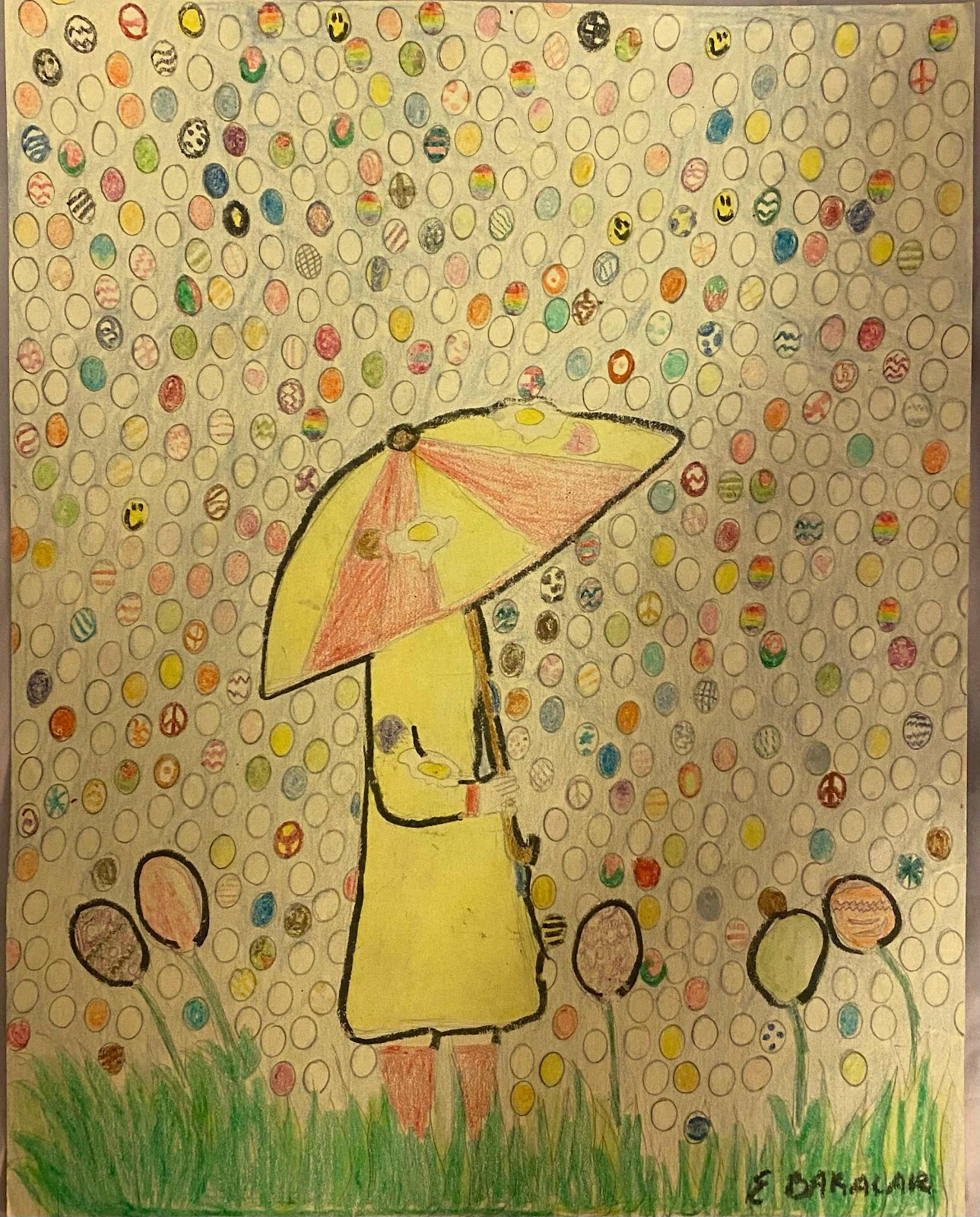
The Egg Picture

One of the more distressing aspects of parenting is that you can never predict what your kids will remember. What you intend them to remember, and how, is like everything else about parenting and life in general: out of your control and in constant opposition to your plans. 

You can spend a king's ransom taking your kids on a vacation, for example, and all your daughter will keep talking about is the luxe dispenser of lemon-infused water in the lobby of the Atlanta Airport Hilton Garden Inn. Or, on the flip side, you can go to great lengths to procure a pet hedgehog, and while taking a bath your son will tell his grandma that what "stuck with him" about these efforts it that they were so focused on his happiness.

My parents are now in their late seventies, and our relationship has never been better: they've both mellowed considerably with age, and I'm trying to make the most of our remaining years together. I'm determined to not argue with them over petty things or regress into old dynamics. As an only child and a mother of two children myself now, I realize that the only things that really matter at all after you become a parent is that you live to see your kids grow up and that you check out of this planet before they do. My parents are on track for that, and I'm glad.

I moved to Alaska when I was 27. I'm turning 45 this year and my daughter, Paige, will be 15. My son, Isaac, will be 12. My life feels split into two very distinct halves: my childhood and young adulthood in New York City with a brief stint in Rhode Island for college, and my adult life in Alaska where my kids were born, where I built my career as a lawyer, and where I stumbled into my non-monetized side-hustle as a blogger and activist. 

But a few times a year, I return to the 1,200 square foot of Bronx apartment where I grew up and where my parents still live most of the time. When I do, it feels like I've entered a wormhole in the space-time continuum. I sleep in my childhood bedroom cocooned by detritus from all phases of my early life: a tacky sculpture I spent $100 of 1990s babysitting money on. An old Cabbage Patch Kid I wanted and lobbied for with a burning passion. A box of Sculpey beads I made. I go into sort of a fugue state then, picking up one object after the other and tripping out on nostalgia, contemplating dumpster services and estate sales and Marie Kondo while simultaneously wondering how I'll ever let go of any of this junk. It's like shopping at Costco, but sadder and without the risk of impulse-buying an inflatable standup paddle board.

My mom has slowly overtaken the drawer space in my old bedroom with paperwork and stationery, but I discovered on a recent visit that one drawer remains relegated--or, more charitably, dedicated--to my old artwork and journals. 

It was in here that I found The Egg Picture.

The Egg Picture, which I drew when I was eight and still very into making art, had assumed an outsized role in my mind as a literal poster for parental failings. I remember meticulously drawing this at my dad's office in a midtown publishing company, waiting for him to be done working for the day. When I was finished I showed it to him and insisted that he mail it straight to The New Yorker, because they'd obviously want it for the cover of their April issue. Always direct and never one to adjust his tone or delivery to the age of his audience, my dad said bluntly: "well, you can try, but that's never going to happen." 

When I reminded my dad of this incident a couple of years ago, I did so through tears of laughter, not recrimination or sadness. "That was a terrible thing to say! Why did I say that?!" he protested. "Exactly, dad! You could've just lied like Mr. Pahlka (my high school English teacher) and said you were positive you'd see my work in The New Yorker someday."

I couldn't believe my stroke of luck in stumbling on the original Egg Picture. I was thrilled to find it but it also made me sad for myself, my somewhat lonely and depressed childhood where I retreated into art and writing, and then also sorry for my dad for saying something off-handed that stuck with me in a "bad" way. I reminded him that he's said plenty of things that have stuck with me in good ways, too, and that parents are only human after all. 

I decided to take the egg picture home to Alaska and frame it, which is kind of weird, because my kids also make plenty of great art that I've framed and hung on my walls, and what sane adult frames their own childhood art? 

But The Egg Picture serves a higher purpose, I think. It's a good reminder that there have never been any grownups in the room. They've all just been making it up as they go along, this whole entire time. We're never done growing up, and we are always fragile and beautiful. Each one of us is a colorful, delicate, self-contained tiny and unique world unto itself. We are each of us in free fall, with the perpetual risk and inevitable fate of ultimately breaking open, all while carrying the persistent hope of developing into something magical and new. 


Sunday, July 17, 2022

Voting No on an Alaska Constitutional Convention in 2022 is the Single Most Important Vote You May Ever Cast. Here’s Why.

It's not an exaggeration to say that. More than any one candidate, more than any single issue ever to come before Alaska's voters--voting against a constitutional convention this November is the single most important thing Alaskans can do for democracy.

That's true no matter where you fall on the political spectrum: far right, far left, or anywhere in between. In a country and state that's increasingly divided and averse to nuance, this should be something that all Alaskans can unite against in force.

I wish I could adequately convey the gravity, expense, and pointless danger of a constitutional convention in Alaska in this moment--both for Alaskans here today and for future generations. 

As I write this, outside interests are pouring millions in unlimited dark money into an effort to turn Alaska into a civic guinea pig. They want to shred and rewrite Alaska's founding document and start over again with a boot on the neck of your personal privacy, natural resources, PFD, schools, the judiciary, and civil rights and liberties--all to the tune of $17 million of Alaskans' money.

First, some background.

Every state in the union has its own constitution. State constitutions can provide more--but never fewer--individual rights and liberties as the federal constitution. The Alaska Constitution is a model of clarity, thoroughness, and individual freedoms. 

There are two ways to change it: amendment or convention. An amendment is the more surgical way. Amendments are single issue and have happened many times in state history. The legislature must pass a three-fourths resolution and then the amendment goes on the ballot for the people to vote on.

The second way is a constitutional convention, like the one we held in 1955 when Alaska was first becoming a state. The question whether to hold a convention goes on the ballot every ten years, and Alaska's voters have always rejected it. The legislature also has the power to call a convention at any time, but never has. The question is up again this year on the general election ballot.

It's hard to pick the worst thing about a constitutional convention, but you could start with everything we stand to lose.

Public schools; subsistence and personal use hunting and fishing; the PFD; public services; power cost equalization and ferries in rural Alaska; the court system; and the Alaska Constitution's crown jewel--an explicit right to privacy from government intrusion--could be vaporized in whole or in part with the stroke of a pen. These explicit rights, and decades of Alaska Supreme Court caselaw affirming and interpreting them, could simply vanish.

You could also lose plenty of sleep over how a convention would run and how the delegates (the people in charge of the rewrite) would be chosen.

Any legally qualified voter in Alaska may run to be a delegate. Sitting legislators could and probably would run as delegates and win on name recognition alone. Recall that these are the same folks who are bickering in Juneau one dysfunctional, gridlocked session after the next while the rest of us watch the state burn, literally and figuratively.

Not to mention the cost.

A constitutional convention would cost Alaskans about $17,000,000 (17 million dollars), and that's a low-ball quote. The convention is expected to last 75 days with 30 more days of post-event wrap-up; lawyer fees; venue rental and event security; support staff for delegates; convention operations; and salaries and per diem for some 65 delegates. The changes they make wouldn't come to the voters until 2026. It's a long, expensive process with no guaranteed outcome of any kind.

Meanwhile, outside groups representing special interests on every facet of the ideological prism will flood these delegate races with cash in order to put their foot soldiers in the room where it happens. 

That means oil companies, environmental groups, school voucher opponents and proponents, abortion opponents and advocates, and others could raid the permanent fund and literally re-write your freedoms and access to public resources and services--all to their own benefit, not yours.

And then there's the impact on Alaska's business climate. The specter of a full constitutional rewrite means businesses would have no way to plan for the future. Among other things, a statewide income tax, the PFD, and environmental regulations would be up for debate, leading to years of legal and regulatory uncertainty and litigation that would discourage or prevent investment in Alaska and paralyze our industries.

Bottom line, a constitutional convention is a costly, unnecessary, and dangerous can of worms that Alaskans would be gravely mistaken to open. Don't risk it. Vote no on a constitutional convention this November, and in the meantime visit defendakconstitution.com to join the nonpartisan effort to protect our Alaskan rights and freedoms. 


Thursday, May 19, 2022

Not Gonna Lie: Nothing Cooler Will Ever Happen to Me in My Life, That's a Wrap, The End!

I won’t lie you guys. Nothing cooler has ever happened to me in my life than what happened in the span of 8 hours yesterday afternoon. Aside from giving birth to my kids, I mean, which is a whole other adventure and not necessarily as fun and painless as this was. 

The writer David Sedaris was in Juneau on his book tour. He was here a few years ago too, but due to a family medical emergency, I had to give away my tickets. This time I had a ticket to the show and was looking forward to a girls' night out, listening to his readings at the Juneau Douglas High School Auditorium after watching my daughter perform in a jazz concert elsewhere downtown.

The afternoon of the show, a friend of mine who works for the radio station that was sponsoring the event called me. She was David's—can I call him David? Mr. Sedaris? DS? I don't even know—anyway, she was his local tour guide, as she’d been several years earlier, and she asked if I wanted to join them for lunch in an hour. "I just think you guys would hit it off," she said.

"Hmm. Let me think about that. Do I want a private audience with one of my all-time literary idols? Whose work I read religiously and whom I have modeled my writing after for years and could only hope to be half as good as? Um, yes please." 

Play it cool, BE CHILL. I thought to myself. Conduct yourself like Steve in the Tao of Steve. Be excellent. Be desireless. Be gone. In other words: don't be thirsty. I can do this, I thought. I was fan-girling hard and I hadn't even left my chair; at this point I was just grateful I'd dressed up for work that day. I knew this was the opportunity of a lifetime--to meet someone whose work I’d admired for so long. How was I going to act normal? 

I had to be myself. “Self,” I told myself, “be you.”

We went to lunch at a local restaurant with a nice view of the water and, as I tend to do when I'm nervous, I just kept talking. 

I'm a nervous talker. I don't sit well with silence when I'm nervous. I just talk and talk and talk. I talked about Alaska and Twitter (which he is not on). I talked about politics and my lawsuit. I talked about relationships and parenting. I talked about books and fitbits and garbage bears and the zombie apocalypse. 

My friend--and his friend who was traveling with him--did their level best to get a word or two in edgewise. But I just kept talking. He did a bunch of talking too, but in my head, I was thinking, as I always do, "you're talking too much. Stop talking." But he was smiling in his warm, affable way--even taking out a notepad to scribble things down—THINGS THAT I WAS SAYING, APPARENTLY?!—every now and then. So I was encouraged (or at least not discouraged) to continue running my mouth; before I knew it, two hours had passed.

My friend and I both had to leave to pick up our kids at school. Their group walked in one direction and I went in the other. "Wait wait wait--Libby!" I heard him say, and he turned around and walked back toward me. I turned around and started walking back toward him. "Would you like to open my show tonight?"

Well. WEEEEELLLLLL.

I don't need to tell you that I almost dropped dead of shock and excitement right then and there, which of course he must have known, because who wouldn't feel that way in my position. Nonetheless, I tried to react modestly BUT/AND ALSO like a literary luminary asking me to open the last stop on his book tour with my random blog posts that he hadn’t seen and only learned existed an hour ago happens to me every other Wednesday.

“Um ... really? Ok?" I said. "Yeah, just read a few things, maybe 10 minutes or so?" My brain was racing as I tried to digest this mind-blowing invitation and then I pivoted quickly to OMG SHIT SHIT SHIT SHIT SHIT WHAT AM I GOING TO READ?!

I raced back to my laptop and started scouring my blog for posts that I thought would work as an opener for an event like this. "You think you can hang with David Sedaris," I muttered to myself. "You better find some material that proves it—and FAST." 

It was 3:00 p.m. and the show was at 7:00. I had to be there at 6:00. I dug around in some promising labels on my blog and came up with these three posts: Old Sturbridge Village Failed to Make the Desired Impact on Me, You'll Never Guess What I Learned on My First Whale Watching Trip, and The Accidental I Love You: I sent them to a few friends who green-lighted them for topic, tone, and length. 

PHEW. Ok. I am ready for this!

I went to my daughter's band concert and then over to the auditorium for the show. Alone in the student drama room, I found a wrapped Lifestyles condom on the floor and mused with relief that at least These Kids Today (TM) are practicing safe sex. I looked myself over in the mirror and again congratulated my 8:00 a.m. self for dressing up and wearing makeup. 

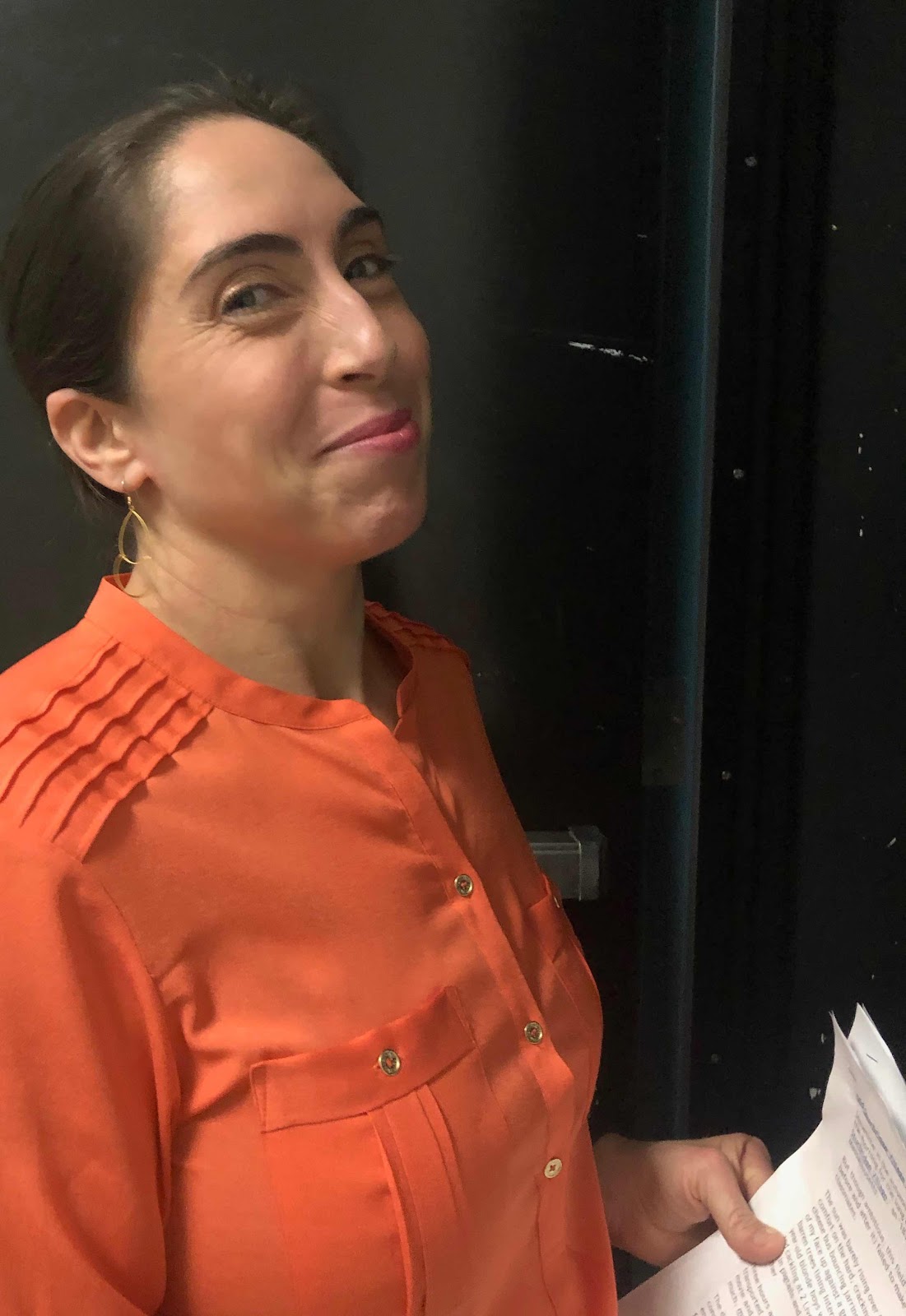
David Sedaris asked me how to pronounce my last name, and this is what he said to introduce me — (Wait … HE is going to introduce ME? First?!) He said:

I had lunch with someone today and I was just so enchanted by her. I can’t remember the last time I met somebody and laughed that hard. And I know that she writes, so I said ‘Please open for me. Please come and read a little something?’ And so, I don’t know, on two hours notice or something she said, ‘um, Okay.’  So here she is, Libby Bakalar.” 

He said ENCHANTED. I made him laugh harder than he could remember laughing! I DIIED. I really and truly and fully DIIIIEEEEED.

But I got up there and read my three blog posts. I tried to read slowly but stick to my time. People seemed receptive; I got some laughs. I sat backstage and listened to the show and marveled at his genius. He talked about David Foster Wallace, one of his idols and an undisputed genius also. I thought about how everyone has their idols and how modesty and authentic self-deprecation are underrated. 

After the show he asked me to repeat a few things I’d said so I handed him the printouts of my reading. CBS 60 Minutes was recording the show, so no other recording was allowed. Thus, my 9 minutes and 58 seconds of fame remain undocumented for posterity.

I thanked him for an amazing opportunity and he commented that I seemed comfortable with public speaking, and that the audience seemed to know me already. “Yeah …” I said. “It’s Juneau, and I’m a loudmouth lawyer. So that explains that!” 

I asked him if it was tiring for him to be “on” for so long and sign so many books. He said no, and also he’s been on the other side of the table plenty of times. I said “it’s hard, you know, because these are really special, once-in-a-lifetime interactions for people, and for you it’s kind of just another day in the office. Kind of like when you go into the hospital to have a baby, and it’s the doctor’s fifth delivery of the week, but for you it’s only ever going to happen once or at most, a few times.” 

Ugh. I was talking too much again, I could feel it.

But here stood a person who is just so open and genuine. Who obviously knew, that despite all my efforts to act nonchalant, I was over the moon about this. During his reading, he plugged and read from a novel by a young woman author named Patricia Lockwood; her book, “Nobody is Talking About This,” was already on my Goodreads list to order and read. He spoke so lovingly about his relationships and animals. He was, as ever, hilarious and self-effacing. Best of all, he was quietly, naturally, and un-ostentatiously using his fame and platform to uplift others. 

Sometimes our idols disappoint us. I’ve known many occasions where someone meets a musician, a writer, an actor they admire—and they just feel snubbed and rejected and terrible. This was the complete opposite of that. I’d always told myself that I’d get along with David Sedaris if I just got to meet him—and DAYENU as we say at Passover— that would have been enough!

The fact that I got to perform with him was truly next level. This is one lunch I’ll be dining out on for the rest of my life.


Monday, May 16, 2022

Crisis of Competence

I don't want to survive the Zombie Apocalypse, which is one of the reasons I don't have a disaster prep kit. I've written about this before, but I'd like to go out with the first wave. I was born in the age of Costco guacamole, and if I can't drive to Costco and buy a six-pack of mini guacamoles, then I don't want to live. It's that simple. 

Some people shoot their own hot dogs and grow (?) their own sourdough starter, but I'm going to starve in the end, and I am fine with that. Except that my level of incompetence is embarrassing and demoralizing, made worse by decades of living in Alaska where everyone seems to know intuitively how to not just survive, but THRIVE, for ten days in a snowbank with nothing but a scrap of fur and a matchstick.

But think of the children! What about your kids? Fortunately, they're growing up in Alaska and already know how to do a lot more useful things than I ever will.

I can't even sew a button onto a peacoat or fix a windshield wiper. Last week I called a friend to come to my office and help me with this button. My mom taught me how to sew, mind you; but rather than sew things, I would just walk around with loose buttons and holes in my clothes until they were too damaged to be of use any longer. Both my friend and I are former east coasters raised by striving academic Jews who, just a generation or two removed from Ellis Island, believed that the secret to conquering the American Dream was memorizing Latin declensions and Shakespeare sonnets and deriving equations in AP calculus. Between our two Ivy League degrees, we could barely sew a fucking button. My friend is also half blind, so we just sat there on the floor, huddled over my coat and laughing uproariously at our own ineptitude as I thread the needle and she tried to sew this button onto my coat.

Today one of my windshield wipers was acting kind of wonky after I'd had my car serviced. After inspecting the wipers for 15 minutes, I concluded that a piece was missing and went back to the service station to ask about it. The mechanic pushed the blade back up into the plastic housing of the wiper and looked at me like I was the biggest moron on earth and like . . . I FELT that, as the kids say.

I have an expensive education that I worked hard for and that I like to think I've used and continue to use for the greater good somehow. And I'm proud to say that I've never been voluntarily unemployed for a day in my life since age 17. But my lack of practical skills is really demoralizing and embarrassing. For numerous reasons that are too painful and private to get into right now, I'm going be jumping feet first into learning how to do a lot more practical things for myself, and while I welcome the opportunity to learn new things, I hate being terrible at stuff and I hate the embarrassment of incompetence.

Fortunately there'sYouTube and Google, which go a long way, but I still have a very long way to go even from there. It's kind of a shame spiral: I lack confidence in myself when it comes to things like basic car and house repair; home economics; computer and tech issues; pre-fab furniture assembly; etc. etc. Then the more confidence I lack, the more my neuroses kick in: I'm a bad feminist because I always count on some man to rescue me from a flat tire or a dead battery. I'm a spoiled princess because I was never made to learn these things. All my friends in Alaska--women!--know how to do this stuff. How can I STILL not know how to do this? I grew up in a city. I've never really mowed a lawn. I don't know how to garden and I can't tell lettuce from poison ivy. I resent myself and the adults who deprived me of these important skill sets. I resent myself for not forcing myself to learn them.

Recently I read a book called Breath by James Nestor. The subtitle was "The New Science of a Lost Art," but it might as well have been "Here's Another Thing You're Doing Wrong." The book was all about how regulating our breath is basically the secret to eternal health, mouth breathing is worse for you than smoking, and our teeth are all fucked up because of the soft foods we eat and the amount of snoring we do at night. 

But what I took away from the book was that here's one more thing I'm doing wrong that I need to fix. Something that I had heretofore thought was completely automatic turns out not to be automatic at all, but rather yet another thing that I can and should consciously change immediately, or otherwise court an early death. 

I'm sure eventually, if I just keep at it, fixing a dead car battery or troubleshooting a boiler will feel as automatic as breathing -- which is to say, something I've been doing wrong all along and will probably never learn how to do right. 


Sunday, April 3, 2022

How to Stop Doing Shit that Feels Bad and That You Don't Want to Do with People You Don't Want to Do it With

I'm turning 45 this year, which is comfortably middle age, if not beyond. When I was 22, as a going-away present from my second ever full-time job, my supervisor gave me a book called How to Say No Without Feeling Guilty

This was in the early 2000's, before “self-care” had evolved much beyond "Calgon, take me away.” Before “female empowerment branding,” when the word "boundary" meant the confines of a geographical area and a “trigger” was just part of a gun.

These concepts (if not the terms) existed, of course, both in life and in this book and others, and although I read the book, I failed spectacularly to internalize it. 

This year I really hit a wall in terms of "self-care." I realized that I needed to stop treating my body and my mind like shit; learn to ask for what I need (or take it, if necessary); set and enforce kind but firm boundaries with people and with my time; be more present; do deep breathing; exercise five times a week; practice “gratitude”; drink more water; write more; read more; and generally do a lot of other mental (and to a lesser extent physical) re-wiring that I’d previously dismissed as bullshit new-age pablum for sad privileged white ladies like myself with nothing of consequence to be sad about. 

I didn't want to do these cloying things until I realized that they were the only things that were going to save me from an unrecoverable life tailspin. And they were all free, so my disdain for their marketing didn’t have to be an obstacle.

2022 was going to be the year I did this.

So I started reading more books to help me see the value in this annoying fucking crap: The Body Keeps the Score; The Courage to Be DislikedBreathCodependent No More; and the Mountain is You, to name a few. (That last one I wish I could put 10,000 copies of into a UN Cargo plane and air drop them, rescue-style, onto the roofs of every woman I know). 

I reluctantly started to internalize their lessons with help from other converts--numerous lifelong friends who evangelized the revolutionary concept that it is actually--shockingly--totally fucking OK to just stop doing shit that feels bad, and that you don't want to do, with people you don't want to do it with. In fact, someone should write that book: "How to Stop Doing Shit that Feels Bad and That You Don't Want to Do With People You Don't Want to Do it With." For now it'll just have to suffice as the title of a blog post.

But that’s what a lot of it all boils down to: not spending what precious time you have on earth engaging in futile conflicts or going places out of a sense of obligation or trying to make other people happy when everyone is responsible for their own happiness. Recognizing when the path you are on is uncomfortable and having the clarity to know it and do something about it, which can be even more uncomfortable at first because growth and change is scary and hard.

It requires an enormous amount of “checking in” with yourself from moment to moment, which is another version of being present I guess. It requires 
embracing hard and uncomfortable and real feelings, and letting them wash over you and acknowledge the reality of them without necessarily hearing them as a call to impulsive action.

It requires establishing and enforcing firm boundaries with the people in your life who, for their own reasons, tend to ignore your boundaries, and it sometimes means moving on from those relationships. It requires identifying your own needs and asserting them —not in any “selfish” way, but in a way that you can conserve valuable energy and show up for the things and people in your life that matter most. It means taking tiny concrete steps toward what seem like insurmountable goals without tripping on the future.

It’s hard AF, but it’s worth it. 


Friday, February 25, 2022

No But for Real Though What the Fuck Did I Just Read

Ok my dudes. 

I know that a lot of people loved this book. Enough to make it a number one best seller in the Failing New York Times, and a pick for Elle Woods’ book club. So far be it for me to shit in anyone else’s root beer float — but seriously … what in the North Cackalacka fuck did I just read?

I’ve been reading voraciously (on paper) of late, in a vain attempt to escape the “news” of plague and war that continues to stream from this glowing rectangle in a relentless surge of clickbait, and the feelings of despair and helplessness it engenders.

Being an unrepentant snob about literary fiction and all fiction … and also nonfiction … and ok fine every 
word ever printed, I suppose I was predisposed to hate this book. But I thought I’d give it a shot. After all, I enjoy mass market candy as much as the next customer at Hudson News. Stephen King, for example, is a master of the craft. But this book was a hot mess, and believe me it takes one to know one.

They say life’s too short to finish books you hate. I say I can’t rip a book like this a new asshole until I get to the very last word. It’s just unfair. So I persevered in my hate-read, and I am officially renaming this book “Where the Sun Don’t Shine.” Because by the time I reached the last page, that’s exactly where I wanted to stick it. Again: if you read this book and liked it, I’m sorry. If you haven’t read it, don’t worry: I won’t include any spoilers in this “review.”

This book was basically a discordant mashup of Nicholas Sparks, James Patterson, the Secret Life of Bees, an Audubon Society quarterly edited by Jane Goodall, the Blue Lagoon, Mary Higgins Clark, and soft-core erotica for white wine moms. 

You can almost see the 108-minute movie playing as you read it: picture a Prince of Tides/The Lake House remake starring Ryan Gosling, one of those Chrises, and maybe that creepy nanny from “Servant” on Apple+, all in a dumpster fire triumvirate of leaf-peeping, crying, and dry humping in a skiff tied up to a tree in the Outer Banks. 

For all I know, it’s already in production.

The book is set in the 1960s, apparently to make full use of all historically available racist/sexist tropes and pidgeon English, with the dialogue written in cringey, contrived southern slang. Sentences like “well that thar fella’s so lowdown he’d hafta climb a ten-foot ladder to kiss a rattler’s ass!” Not that exact sentence, of course, but ones like it. Also a lot of courtroom cliches like “the State rests” and “I’ll allow it!” Which, as someone who’s spent the better part of two decades in and out of courtrooms, was extra cringe.

The main character, Kya Clark, lives alone in a marsh shack after her psycho abusive alcoholic dad drove the rest of her family away with a crow bar. She manages to outrun North Carolina children’s services for years and survive off the land, collecting bird feathers, painting shells, gathering and selling mussels, and buying sardines and saltines from a jolly old Black man named “Jumpin’.”  

Between the ages of 14 and 22 or so, Kya meets two local studs who just randomly motor through the marsh: one of them is a sort of Dr. Doolittle-meets-Bear Grylls-type who teaches her to read, tells her what her period is, and gets her panties wet. He also sets her on an improbable course to becoming a bestselling author of field guides, somehow. The other is a swaggering Tom Brady playboy/sex pest from town who swoops in to run game after Doolittle bounces to Chapel Hill for his marine biology degree. Tom Brady meets an untimely and suspicious end, and the rest is what it is.

After roasting this book in a brief earlier post, someone sent me an article in Slate about the author. Apparently, she’s wanted for questioning in Zimbabwe in connection with the murder of an elephant poacher? And there’s also a New Yorker article about it? Serious Tiger King/Gorillas in the Mist vibes! Definitely not the stuff of a LIVELAUGHLOVE publicity tour, let’s admit. I skimmed the ten-zillion word New Yorker report and it’s a whodunnit that’s more like a the author’s stepsondunnit. Three white interlopers buy a one-way ticket to Africa to save the elephants and righteously murder a poacher? 

This angle turns a benign little beach read into a chilling memoir and basically saved the entire fucking thing for me. If you have 17 hours to spend glued to a hate-read and its salacious backstory, this one’s for you!


Saturday, January 22, 2022

Abridge Too Far

Congress shall make no law respecting an establishment of religion, or prohibiting the free exercise thereof; or abridging the freedom of speech, or of the press; or the right of the people peaceably to assemble, and to petition the Government for a redress of grievances.

(First Amendment to the United States Constitution)

This week, a federal judge here in Alaska ruled that Governor Dunleavy violated my free speech rights under the state and federal constitutions, and also breached Alaska employment law, when he fired me for my personal blog and social media posts criticizing President Trump. 

The story was reported on extensively in local media and picked up nationally and internationally. The 39-page order from district court judge John Sedwick can be found here, for those inclined to dive into the weeds of First Amendment employment law.

Otherwise, the basic gist is this: 

From 2006 to 2018, I was a good lawyer and valued longtime employee of the Alaska Attorney General's Office. I had no problems at work---other than the fact that I was unwilling to stop complaining about Trump on the internet. 

I started this parenting and lifestyle blog in 2014, but in 2015, I began to recognize the existential threat Trump posed—and still poses—to democracy, and felt compelled to keep calling it out. I understood the risks to my personal and professional life that this involved, but knowing I was within my legal rights, I naively assumed that the government would honor them. (Ironic, I know). 

Regardless, I felt congenitally incapable of shutting up, and was unable to stop myself from identifying daily the havoc Trump was wreaking. As the main income-earner in my four-person family and the only one with health insurance, it was a big gamble.

Fast forward to December 3, 2018, when Trumpian acolyte Mike Dunleavy took office as Alaska's 12th governor, and fired me within 20 minutes of being sworn in. 

My termination came on the heels of a forced resignation letter that Dunleavy's Chief of Staff, a Karl Rove-type operator named Tuckerman Babcock, had demanded from me and hundreds of other non-unionized state employees. This was an unprecedented, norm-shattering flex by an incoming administration. I immediately contacted the ACLU, which filed a lawsuit on my behalf the next month. The ACLU also brought a companion case for two state psychiatrists who refused to submit their resignations at all.

This past Thursday, Judge Sedwick, who was appointed by George Bush, issued a long order in my case making a few important findings under complicated U.S. Supreme Court precedent governing public employees' free speech rights. (The order came three months after a ruling in the psychiatrists' case from the same judge that the resignation demands were an unlawful "patronage scheme" or loyalty pledge and therefore inherently unconstitutional).

Because I was not in a union, I lacked automatic constitutional protections in my job. So the question became whether I could be fired for political (associational and free speech) reasons. The answer would be yes, if I were a "policymaker" as that term is defined in this line of cases. But I was not a policymaker, so the question next became whether the government could prove that my personal speech caused legitimate and sufficient “workplace disruption” to refute the presumption that Dunleavy and Babcock fired me because they disagreed with my views. 

They couldn't show that. And because they couldn't, the judge concluded I had been unconstitutionally fired. And because the state had fired me unconstitutionally, it acted in bad faith, giving rise to money damages under my claim for a breach of the covenant of good faith and fair dealing in Alaska employment law. So the state violated state law as well. 

Judge Sedwick recognized that had the state gone about my termination differently, they could reasonably have taken "adverse employment action" against me for my blogging. But given the evidence in the case, this is a bit like saying to a burglar that had he not broken into a house and stolen things, he wouldn't have been arrested for burglary. 

The other interesting legal angle here, in both cases, was the judge's analysis of the qualified immunity doctrine. 

Qualified immunity is what protects government employees from personal liability in their work. In practice it functions more like absolute immunity, because it's very hard to lose. You have to do something really bad and pretty much knowingly bonkers. 

In the psychiatrists' case, Judge Sedwick found that the resignation scheme was bad enough to strip Dunleavy and Babcock of qualified immunity and make them personally liable for their conduct. Not so in my case, which didn't surprise me. As I said, it's very rare for a defendant to lose qualified immunity, and the government has an interest in a robust qualified immunity doctrine; otherwise no one would ever risk working for the government.

Judge Sedwick's order in my case resolved (at least at the trial court level) what's called the "merits" phase of the lawsuit, and the next phase is damages. The constitutional violations entitle me to injunctive and declaratory (non-monetary relief), and the state law claims entitle me to monetary damages. I'm really not sure where that phase will go--that's very much to be decided, as is the state's appetite for an appeal.

In any event, I've now had some time to process the psychological and emotional toll of this "victory." 

I put victory in scare quotes because I'm not sitting here rejoicing. I’m not running around the bases after a walk-off grand slam or dining out on the press coverage. Ok, fine, I am dining out on the press coverage.

But I'm not happy. Far from it. It took three years and ten days to make one single point about free speech. It took three years and ten days to get a federal judge to say yes, this was illegal, and yes, it was unconstitutional.

As a government lawyer myself, I’ve always known that democracy is fragile, justice is glacial, and the constitution is not a self-executing document. In other words, it means nothing if it's not enforced. The problem is, it's hard and expensive to enforce, and there isn't much incentive to do so. 

Being a litigant is time-consuming, brutal, and humiliating. By the time the average citizen catches up with governmental misconduct, the bad actors have collected its spoils, are long gone, and have paid off the victim with public money. What do they care? Nothing but media shaming and excoriation and the occasional financial penalty seems to make even a dent.

But my hope is that this case sends a few messages beyond "Trump-bashing lawyer mostly wins free speech suit," as a reporter at Bloomberg Business News so wryly and accurately put it. And while it's funny that my characterization of Trump as a "fascist cantaloupe" and "Edward Cheeto-Hands" is now forever enshrined in the federal jurisprudential canon, it's not the most important thing.

I hope this case makes future administrations think twice before demanding that everyone pledge loyalty to them or relinquish their jobs or even careers.

I hope it gives non-unionized state employees in Alaska some measure of protection in their jobs, and some assurances that they do not all unequivocally check their constitutional rights at the door just because they work for the state. 

I hope it encourages good citizens to start and continue careers in government. Most of all, I hope it encourages people to continue to speak up and push back against totalitarianism, autocracy, and erosion of the rule of law, because as every scholar of authoritarianism knows, your voice is the only weapon you have in that battle.

I was in a rare and unique position to do something grandiose to prove a point. I was a practicing government lawyer and knew my rights. I had a blog with a good following and was self-destructive enough to use it to make what I thought were important observations about a very dangerous situation. And the people in power were reckless and arrogant enough to approach my firing in the perfect way to subject them to maximum liability. 

In other words, the whole thing was teed up for a great free speech case.

But it came at a huge personal cost. I lost friends and colleagues. I lost what little faith I'd had in systems and structures of employment, democracy, and personal loyalty. My mental health was (and remains) shaky. I absorbed lots of online vitriol, most of which I tried—often unsuccessfully—to ignore. For three years, ten days, and counting, I’ve felt afraid, ashamed, and very much alone. 

People have been thanking me for fighting the good fight and for sticking my neck out and standing up to bullies. I didn't do it because I wanted to. I did it because I could, and because I had to. I'd do it again in a minute.